
Tharo Versus Zebra Reliability for Label Printing
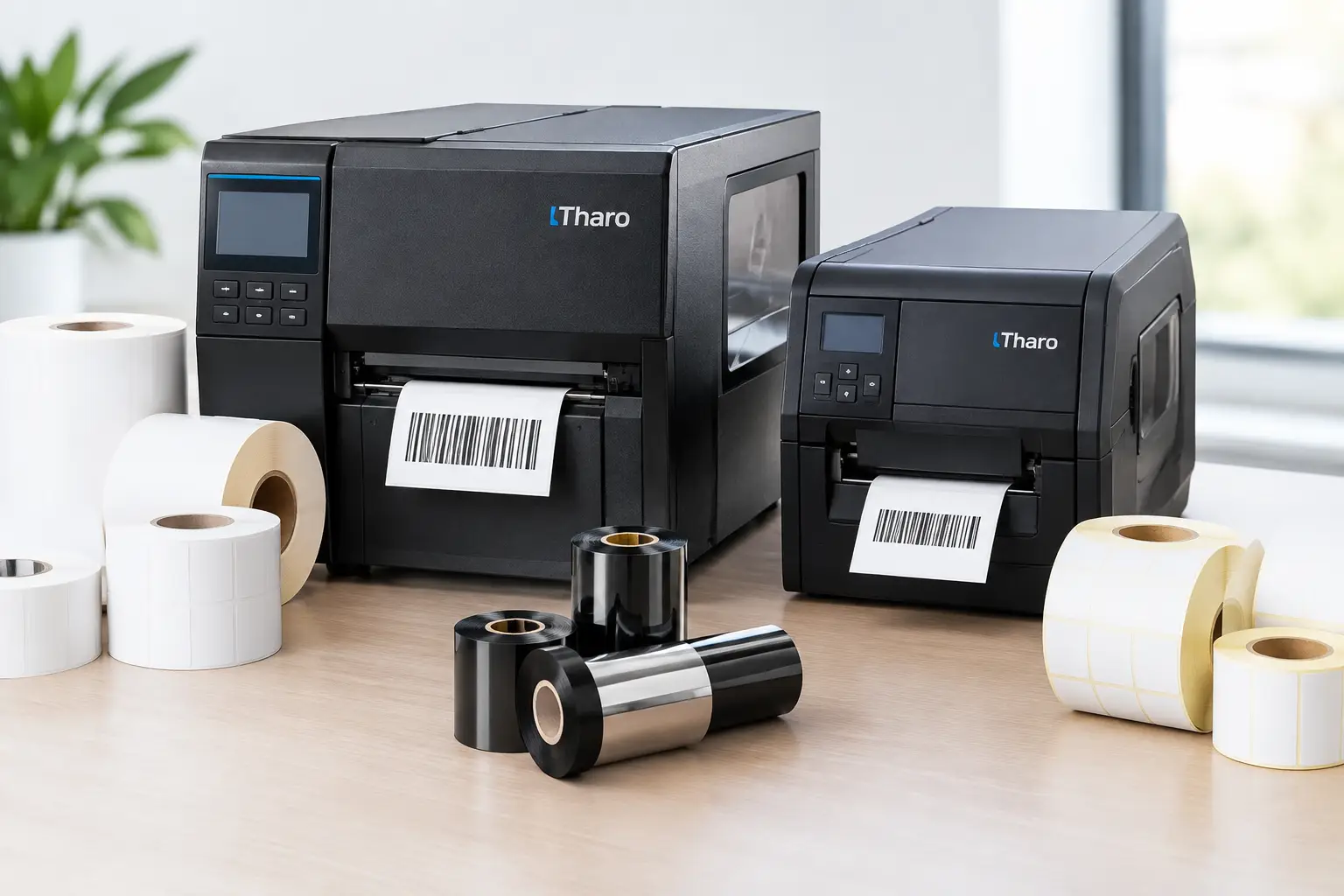
A printer that produces a perfect shipping label at 9 a.m. but stops during a 3 p.m. fulfillment rush is not reliable enough. When evaluating Tharo versus Zebra reliability, operations teams should look beyond brand recognition and ask a more useful question: which printer will keep producing readable, scannable labels at a predictable cost in this specific application?
Both brands serve serious barcode labeling environments. Zebra has a broad installed base and a long history in industrial, mobile, desktop, and RFID printing. Tharo printers are purpose-built for businesses that need dependable thermal label output, practical serviceability, and a cost-conscious path to industrial performance. The right choice depends on label volume, print width, resolution, environmental conditions, software workflow, and how quickly your team can get help when a problem occurs.
Tharo Versus Zebra Reliability Starts With the Application
Reliability is not a single specification on a data sheet. It is the ability to print consistently through the materials, duty cycle, and conditions your operation creates every day.
A warehouse printing 4-inch shipping labels may need a different machine than a manufacturer producing small component labels with dense barcodes. A food processor may prioritize durable synthetic stock and thermal transfer ribbons. A medical, chemical, or electronics operation may need very sharp text, serialized data, and compliance-oriented label layouts. In each case, printer reliability is tied to matching the printer, label, ribbon, and settings to the job.
Zebra offers a wide range of printer families, which can be an advantage for organizations standardizing across many sites or requiring specialized functions. However, a larger product catalog also means buyers must carefully compare the specific model under consideration. Desktop, industrial, high-resolution, RFID, and mobile printers have different duty-cycle expectations and service requirements.
Tharo’s H-Series and T-Series printers are a strong fit for operations that need dependable 4-inch thermal printing without paying for features they will not use. They are designed for practical barcode, product, inventory, shipping, and identification labeling. When configured with the proper media and maintained appropriately, they provide consistent output for demanding business workflows.
Printhead Life Is the Reliability Cost Many Buyers Miss
The printhead is a wear item in every direct thermal and thermal transfer printer. It is also one of the most meaningful long-term cost factors in printer ownership. Heat, abrasion, dust, poor-quality ribbons, incompatible label materials, incorrect darkness settings, and improper cleaning can all shorten its usable life.
A printer may appear less expensive or more expensive at purchase, but the better comparison is the cost of keeping it productive over several years. This includes replacement printheads, media waste caused by poor print quality, technician time, and the cost of delayed shipments or unscannable inventory labels.
Tharo replacement printheads are generally much less expensive than replacement printheads for comparable competing printers. For a facility with multiple printers or a high-volume labeling process, that difference can materially affect the total cost of ownership. It also gives maintenance teams a more economical way to restore print quality when a head eventually reaches the end of its service life.
This does not mean printhead replacement should be treated as routine. The better approach is prevention. Use labels and ribbons suited to the application, select the lowest heat setting that produces a durable, readable image, clean the printhead on schedule, and keep the media path free of adhesive buildup and debris. These practices extend printhead life regardless of brand.
Warranty Coverage Provides a Useful Baseline
Warranty terms do not eliminate downtime, but they indicate how a manufacturer stands behind its equipment. Tharo offers a particularly strong warranty on its standard-width industrial models: 4-inch-wide 203 and 300 DPI H-Series and T-Series printers carry coverage for two years or 2 million printed inches. The 600 DPI and 6-inch-wide models carry coverage for one year or 1 million printed inches.
For buyers comparing printer reliability, those figures deserve attention. A warranty based on printed inches recognizes how industrial printers are actually used. A printer in a busy receiving department or production area accumulates work quickly, and coverage should reflect that reality.
Zebra warranty terms vary by printer model and product category, so buyers should compare the exact model, print width, resolution, and coverage details rather than assuming one general warranty applies across the brand. The same discipline applies to Tharo: verify that the selected model is appropriate for your label size, daily volume, and required resolution.
Resolution and Width Change the Equation
A 203 DPI printer is often the practical choice for shipping labels, warehouse labels, carton labels, and many general barcode applications. It is efficient and cost-effective when labels use standard-size text and barcodes.
A 300 DPI printer provides more detail for smaller labels, finer text, and denser barcode symbologies. For very small component labels, detailed graphics, or highly legible text in limited space, 600 DPI may be necessary. Higher resolution is valuable when the application requires it, but it should not be purchased by default. More specialized equipment can carry different operating and warranty considerations.
Similarly, a 6-inch printer makes sense when wide labels are genuinely part of the workflow. For operations that predominantly print 4-inch labels, a properly selected 4-inch printer is usually the more efficient and economical choice.
Support Can Be the Difference Between Downtime and Recovery
A printer problem is rarely limited to the printer. The source may be the label stock, ribbon, calibration, print settings, driver, network configuration, or the label design itself. When hardware, software, and consumables come from unrelated suppliers, the buyer can spend hours being redirected from one support organization to another.
That is where a coordinated labeling system has a practical reliability advantage. EasyLabel has been a leading label design software platform since 1982 and is used by thousands of companies worldwide, including large enterprises and government agencies. It has a long record of working with major printer manufacturers, allowing businesses to standardize their label design process even when their hardware needs evolve.
For an operation using a Tharo printer with EasyLabel, one USA-based support contact can address the complete workflow. That matters when a production label is not printing correctly and the cause could be in the template, database connection, printer configuration, ribbon selection, or media setup. EasyLabel also does not require a subscription or support contract for customers to receive help, unlike software models that tie assistance to ongoing agreements.
The Label Guy can supply the printer, EasyLabel software, labels, ribbons, and technical guidance as one coordinated system. That reduces purchasing complexity and helps prevent a common source of reliability issues: combining materials and settings that were never intended to work together.
Where Zebra May Be the Better Fit
A fair Tharo versus Zebra reliability comparison should recognize that Zebra may be the right choice in certain environments. Organizations with an existing Zebra fleet, centralized device-management requirements, specialized mobile printing needs, RFID requirements, or corporate standards built around a particular Zebra platform may benefit from continuing that standardization.
There is value in consistency across a large enterprise, especially when IT teams have established drivers, spare-parts procedures, device profiles, and technician training around a single brand. For those buyers, the question is not whether Zebra is reliable in general. It is whether the specific Zebra model and support arrangement deliver the required uptime at an acceptable lifetime cost.
Tharo becomes especially compelling when the operation needs industrial-grade thermal printing, wants to control equipment and replacement-part costs, and values direct support for its complete label printing workflow. A Tharo printer can be a more cost-effective alternative to flagship models when the extra platform features are not needed for the application.
Make Reliability a Purchasing Requirement, Not a Brand Assumption
Before selecting either printer, define the job in operational terms. Confirm the label width and height, direct thermal or thermal transfer method, daily print volume, required barcode size, environmental exposure, connection method, and the cost of an hour without labels. Then evaluate the actual printer model against those requirements.
Ask what consumables will be used, how printheads will be cleaned, what replacement parts cost, who will support the software and hardware, and whether a backup printer is warranted for critical labeling stations. These details determine whether a printer remains dependable after the first few months of use.
The most reliable labeling system is the one that fits the work, uses matched supplies, and comes with knowledgeable support when the work cannot stop. Choose the printer that keeps your labels moving, your barcodes scanning, and your operation in control.