
Best Thermal Transfer Ribbons for Business Labels
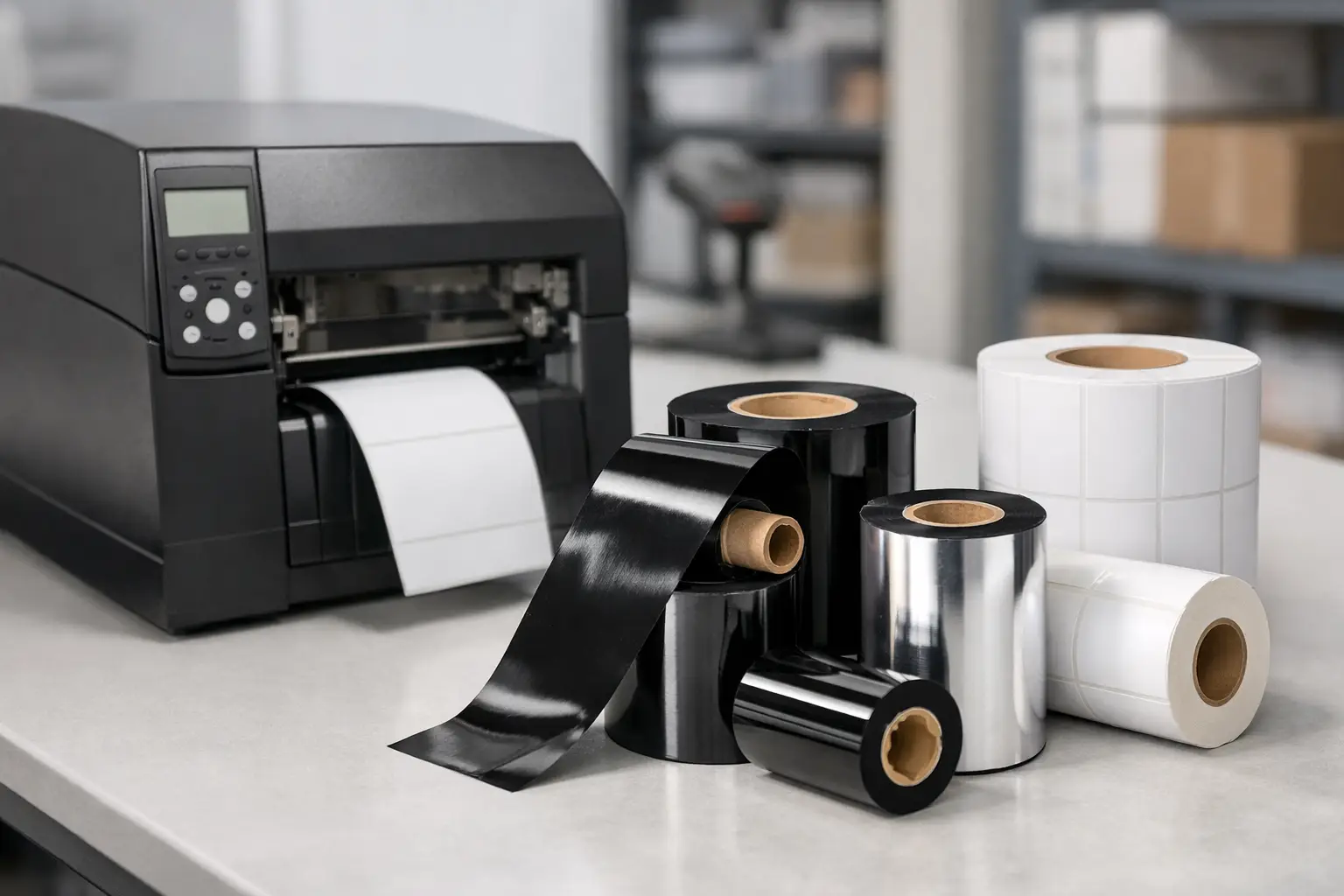
A ribbon that costs a few dollars less can create far more expensive problems when barcode scans fail, print rubs off during shipping, or a printer requires premature service. The best thermal transfer ribbons are not defined by one universal material or price point. They are the ribbons that match your label stock, printer, print speed, and the real conditions your labels must withstand.
For warehouses, manufacturers, distributors, and regulated operations, ribbon selection affects more than print appearance. It affects scan reliability, traceability, compliance, inventory accuracy, and printer uptime. Choosing correctly starts with understanding what each ribbon formulation is designed to do.
What Makes the Best Thermal Transfer Ribbons?
Thermal transfer printing uses a heated printhead to transfer ink from a ribbon onto a label. The ribbon must release ink cleanly at the selected heat setting while producing dark, sharp images without excessive printhead wear. A suitable ribbon also needs to stay readable after the label encounters handling, abrasion, moisture, chemicals, heat, cold, or sunlight.
The label material comes first. Paper labels, coated paper, polypropylene, polyester, and other synthetic materials each accept ribbon ink differently. A ribbon that prints well on a matte paper shipping label may smear or scratch easily on a glossy synthetic label. Conversely, a high-performance resin ribbon can be unnecessary expense for a short-life carton label that only needs to survive a few days in a dry warehouse.
The best choice is therefore application-specific. Start with the label face stock and adhesive, then consider the required print durability, printer settings, and operating environment.
Wax, Wax-Resin, and Resin Ribbon Grades
Most thermal transfer ribbon decisions come down to three main formulations. Each has a clear role in business labeling.
Wax ribbons for paper labels
Wax ribbons are the standard choice for many paper label applications. They produce clear text and barcodes at economical cost and generally print well at higher speeds. They are widely used for shipping labels, warehouse location labels, work-in-process labels, retail tags, and general inventory identification.
Their trade-off is durability. Wax images can be affected by rubbing, moisture, oil, and repeated handling. For a corrugated case label that moves through a normal distribution cycle, that may be perfectly acceptable. For a label that will be wiped down, exposed to friction, or stored for years, wax alone may not be enough.
Wax is often the right answer when the label is paper, the environment is relatively clean and dry, and cost per label matters. It is not simply the low-cost option. It is the appropriate option for a large share of standard barcode applications.
Wax-resin ribbons for added resistance
Wax-resin ribbons combine the print sensitivity of wax with the improved durability of resin. They are commonly selected for coated paper and many synthetic label materials where a sharper, more resistant image is needed without moving to a full resin grade.
This category works well for product identification, inventory labels with a longer service life, shelf labels, bin labels, and many logistics labels. A wax-resin image is generally more resistant to smudging and abrasion than a wax image, especially when paired with compatible coated paper or synthetic stock.
The key word is compatible. Performance varies by ribbon formulation and label material. A generic wax-resin ribbon may look acceptable at the printer but fail a scratch or solvent test later. When labels identify products, assets, or regulated items, testing the actual combination is better than relying on a broad ribbon description.
Resin ribbons for demanding environments
Resin ribbons are built for maximum image durability. They are typically used with synthetic label materials such as polypropylene and polyester where labels must resist abrasion, chemicals, moisture, extreme temperatures, outdoor exposure, or frequent handling.
Common resin applications include laboratory labels, chemical drum labels, electronics identification, durable asset tags, medical device labeling, and compliance labels. Resin can produce excellent barcode and text durability, but it normally requires more print energy and may print at slower speeds than wax-based ribbons.
A resin ribbon should not be selected just because it sounds stronger. It costs more, and the label stock must be able to accept it properly. A high-durability ribbon on an unsuitable paper label does not turn the label into a durable product. The ribbon, face stock, adhesive, and environment must work as a system.
Match the Ribbon to the Label, Printer, and Conditions
Choosing a ribbon only by width and length is a common purchasing mistake. Those dimensions matter, but they are only part of the specification. The ribbon must also be compatible with the printer and the label application.
First, confirm the printer requires thermal transfer media rather than direct thermal labels. Thermal transfer printers use ribbons; direct thermal printers do not. If your printer supports both methods, thermal transfer is generally the better choice when labels need extended life or resistance to handling and environmental exposure.
Next, use the correct ribbon width. The ribbon should be at least slightly wider than the label and print area to protect the printhead from direct contact with the label surface. A ribbon that is too narrow can contribute to printhead wear along exposed areas. Excessively wide ribbons create waste and can complicate media setup.
Ribbon winding direction is equally important. Printers require either coated-side-in or coated-side-out ribbons, depending on their design. Installing the wrong configuration can prevent proper printing even when the ribbon grade itself is correct. Core size, roll diameter, and ribbon length must also fit the printer’s media capacity.
Then consider the label’s working conditions. Ask practical questions: Will the label be exposed to water, oils, cleaners, or chemicals? Will workers scan it once or handle it repeatedly? Does it need to remain readable in a freezer, outdoor yard, production line, or laboratory? Is barcode scan quality essential after months of storage? The answers often narrow the selection quickly.
Print Quality Depends on Setup, Not Ribbon Alone
Even a properly selected ribbon can perform poorly if the printer is not calibrated. Print darkness, speed, pressure, and printhead condition all affect results. A faint barcode may be caused by insufficient heat or excessive speed, while a blurry image may indicate too much heat, incompatible media, or contamination on the printhead.
Use the lowest darkness setting that produces a dark, complete, scannable image. Excessive heat wastes ribbon, can make fine text spread, and may shorten printhead life. It is also wise to inspect the printed label under real conditions rather than judging it only by appearance at the printer.
Perform a basic validation test before committing to a large ribbon order. Print text, small characters, dense barcodes, and any critical variable information. Test the label for scratching, rubbing, scanning, and exposure to the conditions it will actually face. A five-minute test can prevent a costly relabeling project.
Why Ribbon Quality and Consistency Matter
Low-grade or inconsistent ribbons can create uneven print density, poor edge definition, excessive static, ribbon wrinkles, and residue buildup. Those issues waste labels and labor, but they can also interrupt receiving, shipping, and production when barcodes stop scanning reliably.
Consistency matters most in high-volume operations. A ribbon that performs differently from one roll to the next forces operators to adjust printer settings, troubleshoot scan failures, or replace media mid-run. That is not a savings. It is an avoidable source of downtime.
The Label Guy supplies thermal transfer ribbons as part of a complete labeling system, with labels, printers, and technical guidance available from one specialized source. That matters when a label application needs more than a standard roll size. A supplier who understands the interaction between label stock, ribbon chemistry, printer settings, and barcode requirements can help identify a workable combination before it reaches the production floor.
For qualifying orders over $100, free ground shipping is available within the 48 contiguous United States. For recurring applications, standardizing on a tested ribbon and label combination also makes replenishment simpler and reduces variation between sites or shifts.
Avoid These Common Ribbon Purchasing Errors
The most frequent error is ordering by price alone. An inexpensive wax ribbon may be the right purchase for a paper shipping label, but it is the wrong purchase for a synthetic label exposed to cleaning agents or abrasion. The opposite mistake is over-specifying every application with resin, which can increase consumable cost without improving the result that matters.
Another mistake is treating all black ribbons as interchangeable. Formulation, coating quality, backcoat properties, and compatibility vary. A ribbon should be evaluated for image quality and durability on the specific label stock used in your operation.
Finally, do not overlook printer maintenance. Cleaning the printhead on the recommended schedule, using compatible media, and avoiding excessive darkness settings help protect one of the printer’s most valuable components. Good ribbons support that goal; they do not replace proper maintenance.
The practical choice is the ribbon that prints cleanly, scans consistently, survives its required service life, and fits the budget for the application. Test the full label system under actual conditions, then make that proven combination your operating standard.