
Warehouse Receiving Label Workflow Guide
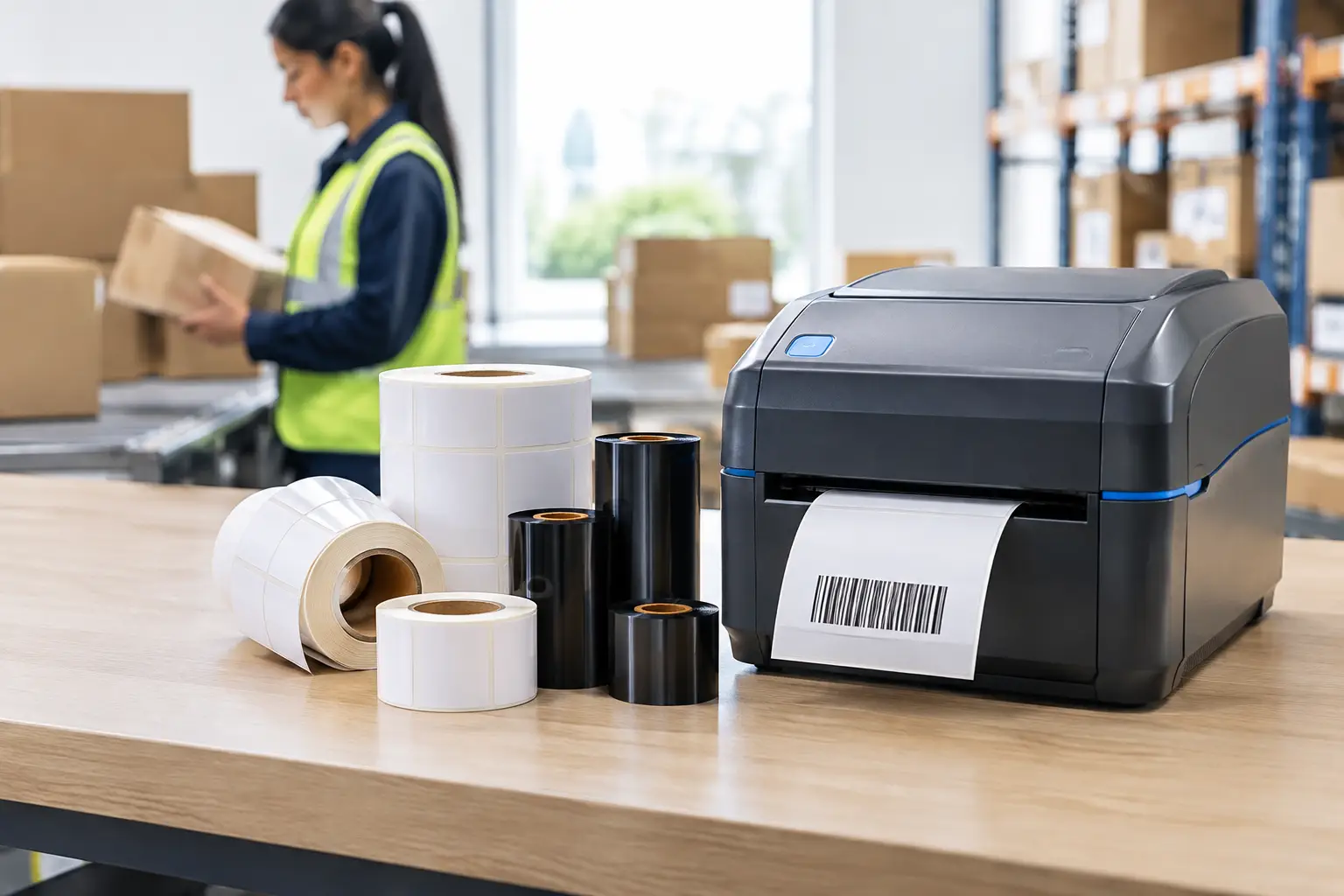
A truck can be unloaded quickly and still create days of inventory trouble. One unreadable barcode, one mislabeled pallet, or one receiving clerk working from an outdated purchase order can put the wrong material into stock and send a bad record downstream. This warehouse receiving label workflow guide outlines a practical way to label incoming goods accurately, establish traceability at the dock, and keep inventory records aligned with what physically entered the building.
The goal is not to put a label on every box simply because the process calls for it. The goal is to create a clear identity for every item, case, pallet, or lot that must be found, counted, moved, inspected, or shipped later. A receiving label workflow should make that identity easy to scan and difficult to misinterpret.
Start the Label Workflow Before the Shipment Arrives
Receiving accuracy begins with advance shipment information. When purchase order data, expected quantities, supplier part numbers, and lot requirements are available before a delivery reaches the dock, staff can verify goods instead of trying to reconstruct information from packing slips.
For scheduled inbound deliveries, many warehouses print expected-receipt documents or prepare label templates before unloading begins. The label format should pull from the same approved data source used by the warehouse management system or ERP. That reduces manual entry and prevents a clerk from typing a part number differently from the way it exists in the system.
A practical receiving label typically includes the internal item number, item description, supplier or manufacturer part number, quantity, unit of measure, receipt date, purchase order number, and a scannable barcode. Lot number, serial number, expiration date, country of origin, inspection status, and storage conditions may also be required depending on the product.
The right data depends on the operation. A distributor receiving common maintenance supplies may only need a SKU, quantity, and location-directed barcode. A food, pharmaceutical, aerospace, or electronics operation may need lot-level or serial-level traceability. Adding every available field to every label can make scanning and visual verification slower, so design for the decisions employees actually need to make at the dock.
Warehouse Receiving Label Workflow Guide: The Core Sequence
A controlled receiving process follows a repeatable order. Staff should first confirm the carrier, purchase order, and shipment condition. They then count or scan the delivered units, identify exceptions, create the required internal labels, apply them consistently, and complete the transaction before material moves into general inventory.
The physical product and the electronic receipt must match at each point. If a carton is short, damaged, over-delivered, or missing supplier identification, label it as an exception and move it to a designated hold area. Do not allow problem material to enter normal putaway because it was labeled “temporarily.” Temporary labels often become permanent sources of bad inventory data.
Once the receipt is verified, print labels at the point where the data becomes final. In a small facility, that may be a receiving desk near the dock. In a larger operation, a networked thermal printer may be positioned at each receiving lane or quality inspection station. The closer printing is to verification, the less likely labels are to be mixed between receipts.
Apply labels to a clean, visible surface that will remain accessible after putaway. Avoid pallet wrap that will be removed, carton seams that can split, and curved or rough surfaces where an adhesive cannot hold. For pallet labels, place duplicate labels on adjacent sides when forklifts or rack positions may block one view. The label should be scannable without requiring an employee to rotate a load or climb around it.
Use the Right Barcode and Human-Readable Information
Barcode selection should reflect the amount of data being encoded and the scanners used on the floor. Code 128 is a common choice for internal receiving labels because it efficiently handles letters and numbers. GS1-128 may be appropriate where standardized application identifiers are required. Two-dimensional symbols such as Data Matrix or QR codes can store more information in a smaller area, but they require scanners and workflows that support them.
The barcode is only useful if it scans reliably. Keep a proper quiet zone around the symbol, use sufficient bar width and height, and test labels with the actual scanners used at receiving and putaway. A barcode that scans at a desk but fails through stretch wrap, under warehouse lighting, or after a cold-storage cycle is not ready for production.
Human-readable text still matters. Forklift operators, quality personnel, and supervisors often need to verify an item without a scanner in hand. Make the internal item number, lot number, quantity, and status easy to find. Use plain descriptions where they prevent confusion between similar SKUs. Small type, crowded fields, and low-contrast printing create mistakes even when the barcode is technically valid.
Match Label Materials to Receiving Conditions
Paper labels are often sufficient for dry, short-term warehouse use, particularly when labels are applied to corrugate and used before the product ships again. They are economical and print well for basic receipt and inventory identification. They are not automatically the best choice for every application.
Thermal transfer labels and ribbons are the better option when receiving labels must survive abrasion, moisture, temperature changes, outdoor staging, chemical exposure, or long storage periods. The ribbon should be matched to the label face stock and the expected conditions. Wax ribbons are cost-effective for many paper labels, while wax-resin or resin ribbons provide greater durability on synthetic materials and in demanding environments.
Adhesive selection matters as much as print quality. Cold cartons, dusty returnable containers, plastic drums, and textured surfaces can require specialized adhesives. A label that falls off after receiving breaks the link between the physical product and the inventory record. Test the complete label, ribbon, adhesive, and surface combination before standardizing it across the facility.
Build Controls for Exceptions and Relabeling
Receiving labels need a documented exception path. If an item arrives without a readable supplier barcode, a warehouse employee should know whether to assign an internal item number, hold the material for purchasing review, or create a provisional receipt. The same rule applies to mixed pallets, unknown lots, damaged cartons, and deliveries that do not match the purchase order.
Relabeling should be controlled as well. When a label is replaced because of damage or a scan failure, the new label must retain the same identity unless an authorized correction is being made. If a lot number, expiration date, or quantity changes, record who made the change and why. This is especially important for regulated products and operations that must investigate shortages, recalls, or quality holds.
A simple status system helps prevent accidental use of unapproved material. Labels or accompanying placards can distinguish received, pending inspection, released, quarantined, and rejected inventory. The labels should support the system, not replace it. Employees must be trained that a status barcode or color cue has a specific operational meaning.
Choose Printing Equipment That Supports Uptime
Receiving is a poor place for printer downtime. A printer should produce crisp barcodes consistently, handle the required label widths and media types, and be straightforward for operators to reload. Printer cost is only one part of the equation. Printhead replacement cost, warranty coverage, support availability, and compatibility with label design software affect the long-term cost of ownership.
Tharo thermal printers are a practical alternative to higher-priced flagship models when a warehouse needs dependable industrial label output without paying for features it will not use. On 4-inch 203 and 300 DPI H-Series and T-Series models, the warranty covers two years or two million printed inches. Replacement printheads are generally less expensive than those for many competing printer lines, which can materially reduce maintenance costs over the life of the equipment.
For label design and database-driven printing, EasyLabel has been a proven platform since 1982. It is used by thousands of organizations worldwide, including large enterprises and government agencies, and it works well with major printer manufacturers. Unlike software options that require ongoing subscriptions or support contracts for access to assistance, EasyLabel does not require either. A receiving team can build approved templates, connect variable fields, and print consistent labels without turning every software need into a recurring fee.
When software, printer, labels, ribbons, and technical guidance come from one specialized source, troubleshooting is simpler. The Label Guy provides a complete labeling system and one US-based support number for customers using EasyLabel with Tharo printers. That is a more direct support path than being passed among a software provider, printer manufacturer, and consumables reseller.
Measure the Workflow, Then Improve It
Track receiving label failures as operational data. Monitor mis-scans, reprints, labels that detach, receipt discrepancies, putaway delays, and items found without identification. A repeated reprint issue may point to printer settings or ribbon selection. Frequent quantity errors may reveal that the receiving unit of measure is unclear. Labels placed incorrectly may show that pallet handling patterns were not considered during design.
Review the process after changes in suppliers, packaging, inventory software, warehouse layout, or compliance requirements. The best receiving label workflow is not the one with the most fields or the most expensive equipment. It is the one that gives your team a dependable, scannable identity from the dock to final disposition, even during a busy receiving shift.