
Direct Thermal Versus Thermal Transfer Labels
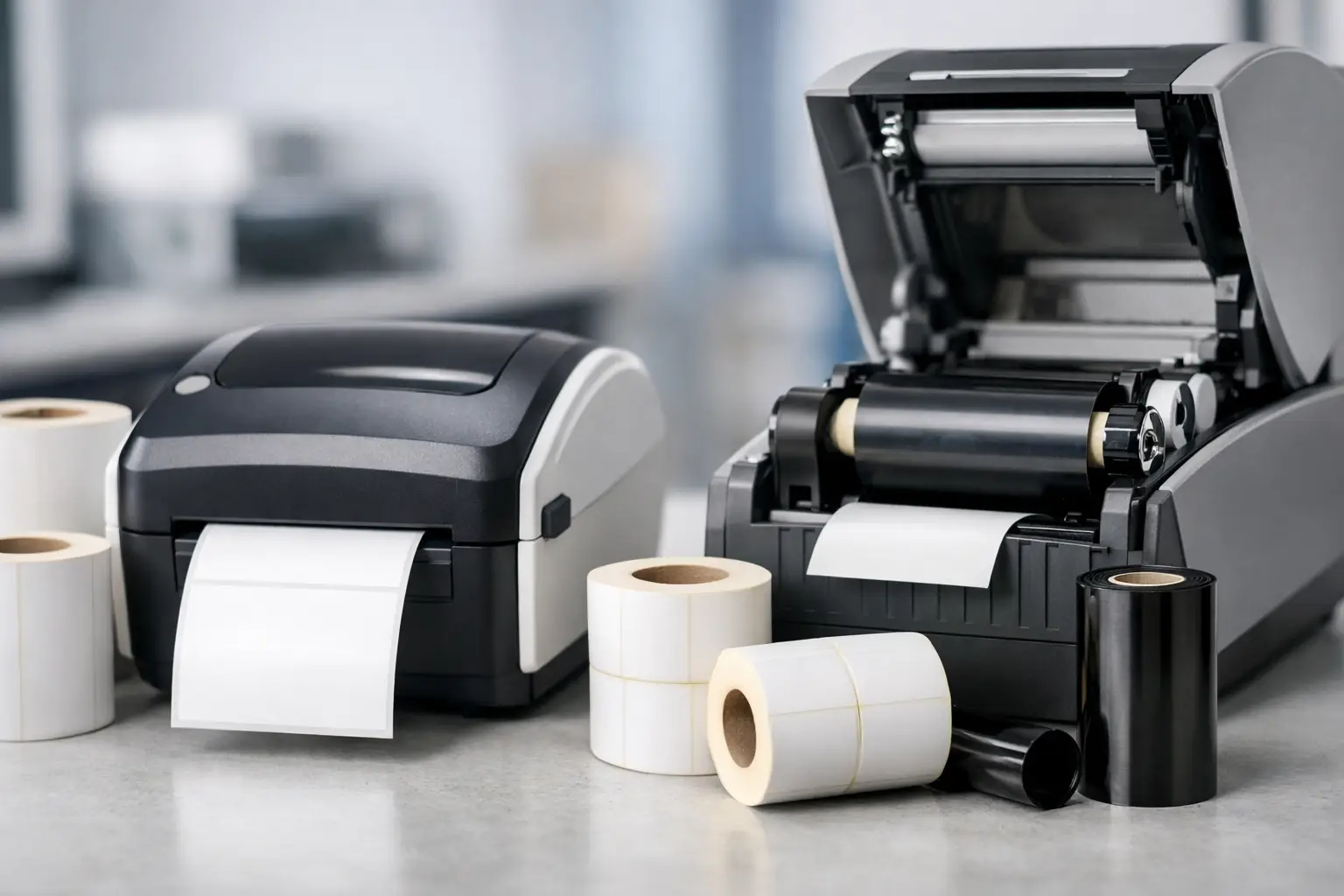
A warehouse label that scans perfectly at receiving can become a problem if it fades before the pallet reaches its destination. That is the real decision behind direct thermal versus thermal transfer printing. Both technologies produce sharp, readable barcodes, but they perform very differently once heat, light, abrasion, chemicals, storage time, and handling enter the picture.
Choosing the wrong method can lead to rescans, relabeling labor, shipping delays, inventory errors, and avoidable supply costs. Choosing the right one gives operations a dependable identification process that matches the actual life of the label.
Direct Thermal Versus Thermal Transfer: The Core Difference
Direct thermal printing creates an image by applying heat directly to a chemically treated label face stock. The printhead heats selected areas of the material, causing those areas to turn dark. No ribbon is required.
Thermal transfer printing uses a heated printhead to melt or transfer ink from a ribbon onto the label. The ribbon, label material, and printhead work together to produce the final image. Because the image comes from the ribbon rather than a heat-sensitive coating, thermal transfer gives buyers far more choices in label materials, colors, adhesive types, and durability levels.
The practical distinction is simple. Direct thermal is usually the right fit for short-life labels used in controlled conditions. Thermal transfer is designed for labels that must stay readable through extended storage, repeated handling, harsh environments, or demanding compliance requirements.
When Direct Thermal Printing Makes Sense
Direct thermal is an efficient choice when labels have a short, predictable service life. Shipping labels are the best-known example. A parcel label generally needs to remain scannable through picking, packing, carrier handling, and delivery, then its job is finished.
This method is also common for receipts, visitor badges, grocery scale labels, parking tickets, cross-dock labels, route labels, and short-term warehouse identification. Operations benefit from fewer consumables because there is no ribbon to purchase, load, track, or dispose of. Printer operation is straightforward, and media changes can be faster for teams producing high volumes of temporary labels.
Direct thermal materials can produce excellent barcode quality at the point of print. The limitation is image stability. Heat-sensitive facestocks can darken or fade when exposed to elevated temperatures, direct sunlight, friction, moisture, plasticizer migration, or certain chemicals. A label placed on a warm dashboard, stored near heat, or handled repeatedly may become difficult to scan.
For that reason, direct thermal should not be selected merely because it is less expensive per print job. It should be selected because the label’s expected life and environment support it.
Good Direct Thermal Applications
Direct thermal is typically a strong match for applications where labels are used for days or weeks rather than months or years. Typical examples include outbound shipping and receiving labels, temporary shelf labels, same-day medical specimen tracking, food delivery labels, work-in-process tickets, and short-term asset movement labels.
It can also be a practical option for operations that need to print large quantities quickly and do not require color coding, specialty materials, or permanent identification. The key question is whether the printed image must survive after the immediate transaction is complete.
Why Thermal Transfer Is the Durable Choice
Thermal transfer printing is built for labels that cannot fail in the field. By pairing the correct ribbon with the correct label stock, businesses can produce identification that resists smudging, abrasion, UV exposure, moisture, oils, solvents, cleaning agents, and temperature changes.
This makes thermal transfer a standard choice for product labels, inventory labels, asset tags, compliance labels, chemical container labels, laboratory identification, electronics labels, healthcare labels, outdoor equipment tags, and long-term warehouse bin labels. It is also the preferred method when a barcode must remain readable through a product’s full manufacturing, storage, distribution, or service cycle.
The ribbon is central to performance. Wax ribbons are economical and work well with many paper labels for general-purpose applications. Wax-resin ribbons add greater resistance to scratching and handling. Resin ribbons provide the highest level of durability and are commonly used with synthetic materials such as polypropylene, polyester, and vinyl for demanding environments.
A thermal transfer printer can support far more than black paper labels. It can print on synthetic materials, tag stocks, specialty adhesives, colored facestocks, and labels designed for freezers, rough surfaces, drums, high heat, or outdoor exposure. That flexibility is often worth more than the initial savings associated with direct thermal printing.
Applications That Require Thermal Transfer
If a label must stay readable for months, withstand regular handling, or support product traceability, thermal transfer should be the starting point. Manufacturers commonly use it for component identification, serialized product labels, UL-related markings, maintenance labels, and work-in-process tracking. Warehouses use it for rack labels, location labels, returnable container identification, and long-term inventory control.
Thermal transfer also supports compliance-driven workflows where faded text creates risk. Lot numbers, expiration dates, hazard communication information, patient identifiers, and regulatory details need to remain legible. In these cases, a ribbon-based print process provides the consistency and durability that temporary direct thermal labels cannot always deliver.
Compare Cost by Label Life, Not Just Supplies
Direct thermal often has a lower upfront consumables cost because there is no ribbon. That can make it attractive for high-volume shipping operations and other temporary uses. It also reduces the number of items a team needs to stock.
Thermal transfer adds the cost of ribbons, but the comparison should not stop there. A faded or damaged label can create labor costs, shipment exceptions, inventory discrepancies, customer complaints, and rework. If the label needs to survive, thermal transfer may be the lower-cost choice over the full life of the item.
Printer maintenance is another consideration. Direct thermal printing can place more wear on the printhead because the heat-sensitive media is in direct contact with it. Thermal transfer ribbons can act as a barrier between the printhead and the label surface, which may help protect the printhead in the right application. Printhead life still depends on media quality, darkness settings, cleaning practices, and operator handling.
The most useful cost calculation includes media, ribbons, printer wear, relabeling labor, scan failures, and the consequences of an unreadable barcode. A label that costs slightly more but prevents a receiving delay or a compliance issue is usually the better operational purchase.
Match the Material, Ribbon, and Adhesive
Thermal printing performance depends on more than choosing a printer type. The label material and adhesive must suit the surface and environment. A permanent paper label may work well on a clean corrugated carton, while a freezer application may need a cold-temperature adhesive and a face stock that remains stable in low temperatures.
For thermal transfer, ribbon selection must also match the material. A wax ribbon on paper can be highly effective for general warehouse labeling, but it is not the right choice for a synthetic label exposed to chemicals or outdoor conditions. A resin ribbon may provide the necessary resistance, but it needs to be tested with the selected facestock to verify print quality and durability.
Surface texture matters as well. Rough plastic, oily metal, curved containers, recycled corrugate, and powder-coated equipment can all require specialized adhesives. The same is true for labels exposed to freezers, heat, moisture, or repeated cleaning. No print technology can compensate for an adhesive that does not stay attached.
Questions to Ask Before Buying
A clear application review prevents most thermal printing mistakes. Ask how long the label must remain readable, what it will be applied to, and what conditions it will face. Consider whether the label will encounter sunlight, heat, cold, friction, water, oil, solvents, or frequent scanning.
Also determine whether the operation needs only black variable information or requires preprinted color, warning panels, branding, or specialized label constructions. Think about printer volume, label size, barcode density, and whether labels need to work with existing software and data sources.
For many businesses, the best answer is not one technology for every task. A distribution operation may use direct thermal for outbound parcel labels and thermal transfer for rack locations, product identification, and asset tracking. Matching each workflow to its actual requirements keeps costs under control without sacrificing barcode reliability.
Build a Labeling System That Holds Up
The printer, labels, ribbons, and labeling software should be treated as one operating system rather than separate purchases. A capable thermal printer cannot deliver dependable results with poorly matched media, and quality labels cannot fix inconsistent data or incorrect barcode formatting.
The Label Guy helps businesses evaluate the complete setup, from thermal printers and compatible ribbons to stock or custom labels and EasyLabel software. That approach is especially valuable when one labeling program includes shipping, inventory, product, compliance, and asset labels with different performance requirements.
Before standardizing on direct thermal or thermal transfer, test the label in the conditions it will actually face. Put samples through normal handling, storage, scanning, and environmental exposure. The right label is the one that still scans when the work is happening, not just when it first comes off the printer.