
Best Thermal Transfer Ribbon for Resin Labels
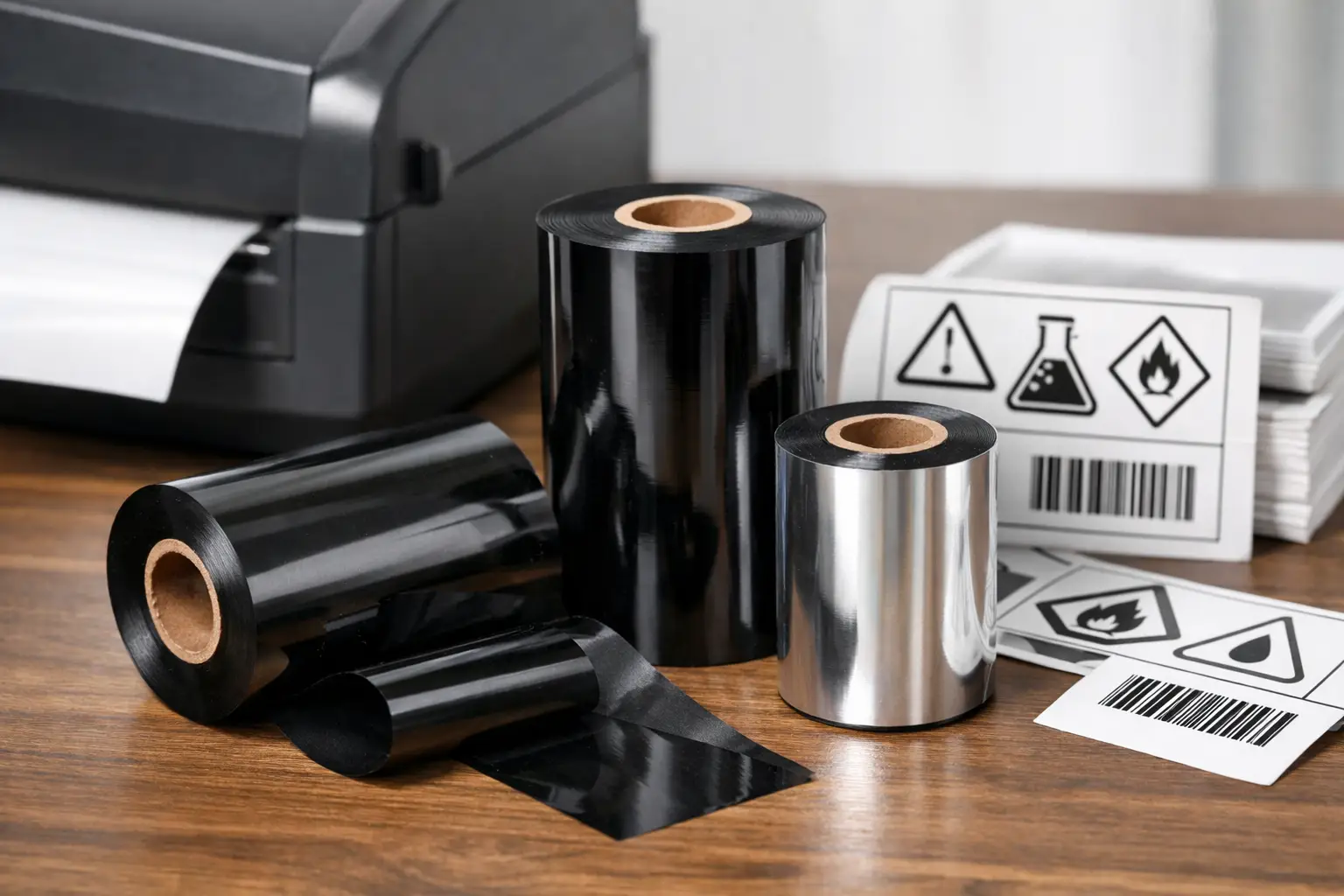
If your resin labels are smearing in the field, scratching during handling, or failing after exposure to chemicals, the problem often is not the printer. It is ribbon selection. Choosing the best thermal transfer ribbon for resin labels comes down to matching the ribbon formula to the label material, printhead, and real-world conditions the label must survive.
Resin labels are usually selected because the application is demanding. These labels show up on asset tags, laboratory identification, electronics, chemical containers, outdoor equipment, rating plates, and compliance labeling where ordinary paper labels and low-grade ribbons will not hold up. In those cases, a generic wax ribbon is the wrong tool. Even a wax-resin ribbon may fall short if the label faces solvents, abrasion, heat, or extended outdoor exposure.
What makes the best thermal transfer ribbon for resin labels?
The short answer is full resin ribbon, but that is only the starting point. Not every resin ribbon performs the same way, and not every resin label stock needs the same ribbon characteristics.
A true resin ribbon is engineered for synthetic label materials such as polyester, polypropylene, and polyimide. It generally delivers stronger resistance to scratching, chemicals, moisture, and heat than wax or wax-resin options. That durability is why resin ribbons are the standard choice for industrial and compliance labeling.
The catch is that resin ribbons typically require more heat to transfer cleanly. That means printer capability, print speed, and label face stock all matter. If your printer settings are off, even a high-quality resin ribbon can produce light print, incomplete bars, edge voids, or poor adhesion.
Why wax and wax-resin often fall short
For basic shipping labels or short-life inventory labeling, wax ribbons are cost-effective and perfectly suitable. Wax-resin ribbons step up durability and are often a good fit for coated papers and some synthetic materials used indoors. But resin labels are usually chosen for applications where failure has a cost – rework, misidentification, compliance risk, or downtime.
In those situations, the best thermal transfer ribbon for resin labels is usually not the least expensive ribbon on the shelf. A cheaper ribbon may print acceptably on day one, then fail after cleaning, transport friction, or outdoor exposure. That is a poor trade if the label is tied to traceability, safety, or product identification.
This is where experienced buyers look beyond ribbon category and ask a more useful question: what does the label have to survive?
Match the ribbon to the environment
A resin ribbon should be selected based on the conditions after printing, not just the appearance coming off the printer. A label applied to a warehouse rack has different needs than one placed on a drum, circuit board, or sterilized medical device pouch.
Abrasion resistance
If labels will be rubbed by cartons, bins, cables, tools, or repeated handling, abrasion resistance matters first. Full resin ribbons are designed to bond more aggressively to synthetic surfaces, making the print harder to scratch off. This is especially relevant for barcode labels that must scan after weeks or months of use.
Chemical resistance
For laboratories, manufacturing, automotive, and GHS-style applications, labels may face alcohol, oils, cleaners, or industrial chemicals. Here, standard wax-resin products can fail quickly. The best ribbon is a resin formulation tested for the specific chemical family your operation uses. General chemical resistance is helpful, but validation against your actual cleaners or solvents is better.
Heat resistance
Some labels must survive elevated temperatures during processing, storage, or product use. Electronics and high-temperature tracking applications often require both a high-performance synthetic label and a resin ribbon formulated to maintain legibility under heat. In this case, the label and ribbon should be treated as a system.
Outdoor durability
If the label will face sunlight, moisture, and temperature swings, you need more than a durable ribbon. You need a synthetic stock with the right adhesive and a resin ribbon that resists environmental wear. Ribbon alone cannot compensate for the wrong label construction.
Label material matters as much as the ribbon
One of the most common mistakes in specifying the best thermal transfer ribbon for resin labels is treating all resin-compatible labels as interchangeable. They are not.
Polyester is a common choice for durable industrial labeling because it offers excellent dimensional stability and print durability. Polypropylene can be a good fit for labels needing moisture resistance and flexibility, though performance varies by surface coating and end use. Polyimide is used where very high heat resistance is required, such as electronics and PCB labeling.
Each material accepts print differently. Some topcoats are optimized for resin performance, while others are more forgiving with wax-resin. If you are seeing inconsistent print quality, the issue may be poor compatibility between the ribbon and the label coating rather than a bad ribbon by itself.
Printer setup can make a good ribbon look bad
A lot of ribbon complaints start with settings, not supplies. Resin ribbons generally print at higher energy levels than wax ribbons. If the printer is running too cool or too fast, the ribbon may not anchor properly to the label surface.
Print speed, darkness, pressure balance, and media calibration all affect results. Printheads also matter. A worn printhead can create weak spots, especially on dense barcodes, small text, and compliance symbols. If your operation is switching from paper labels with wax ribbon to synthetic labels with resin ribbon, settings should be reviewed rather than reused by default.
This is one reason many businesses prefer working with a specialist supplier rather than a broad-line reseller. Matching printer, ribbon, label stock, and software setup reduces trial and error and shortens the path to a reliable result.
How to evaluate ribbon performance before buying in volume
The right approach is practical. Start with the label construction, printer model, and application conditions. Then test ribbon candidates under the same conditions the printed label will actually face.
A useful test goes beyond checking whether the image looks dark enough. Print barcodes, small text, and solid areas. Let labels cure if needed, then perform scratch testing, solvent wipe testing, and scan verification. If the label will be exposed to heat, cold, or moisture, test those conditions too.
The cheapest acceptable ribbon in a quick office test is often not the best production choice. Buyers should focus on durability, scan consistency, and reduced replacement rates. A ribbon that costs slightly more but prevents relabeling and failed scans usually lowers total operating cost.
Signs you have the wrong ribbon for resin labels
If print is rubbing off easily, the ribbon may lack the durability the application needs. If print looks patchy or incomplete, heat settings or ribbon compatibility may be off. If barcodes scan inconsistently, the problem may be image sharpness, ribbon transfer, or poor contrast with the label surface.
There is also an opposite problem: using an overbuilt ribbon where it is not necessary. If labels are used briefly indoors and never face abrasion or chemicals, a full resin ribbon may add cost without delivering meaningful value. The best choice is not always the highest-performing ribbon on paper. It is the right ribbon for the actual workload.
What business buyers should ask before choosing
For purchasing teams, the most productive questions are straightforward. What synthetic label material are you using? What printer make and model will run it? What resistance do you need – scratch, chemical, heat, outdoor, or all of the above? How long must the label remain readable? Are there compliance requirements tied to print durability?
Those answers narrow the field quickly. They also help avoid a common procurement issue: buying ribbon based only on width and core size. Physical fit matters, but application fit matters more.
For operations that need dependable results across printers, labels, and software, working with a supplier that understands the full labeling system has a clear advantage. The Label Guy supports that kind of end-to-end buying decision with printers, labels, ribbons, and software aligned to the application instead of sold as disconnected parts.
The real standard for the best thermal transfer ribbon for resin labels
The best thermal transfer ribbon for resin labels is the one that produces a sharp, scannable image and keeps that image intact through the full life of the label. In most industrial cases, that means a quality full resin ribbon matched to a synthetic label stock and properly configured printer. But the exact ribbon still depends on surface coating, exposure conditions, and required durability.
If the label carries product identity, compliance data, asset information, or traceability codes, ribbon selection should be treated as an operating decision, not a commodity purchase. A little extra attention up front prevents unreadable labels, repeat work, and avoidable interruptions later.
The simplest way to make the right choice is to test the ribbon in the environment where the label has to perform, then standardize on what holds up when the pressure is real.