
Hazardous Waste Labeling Requirements Guide
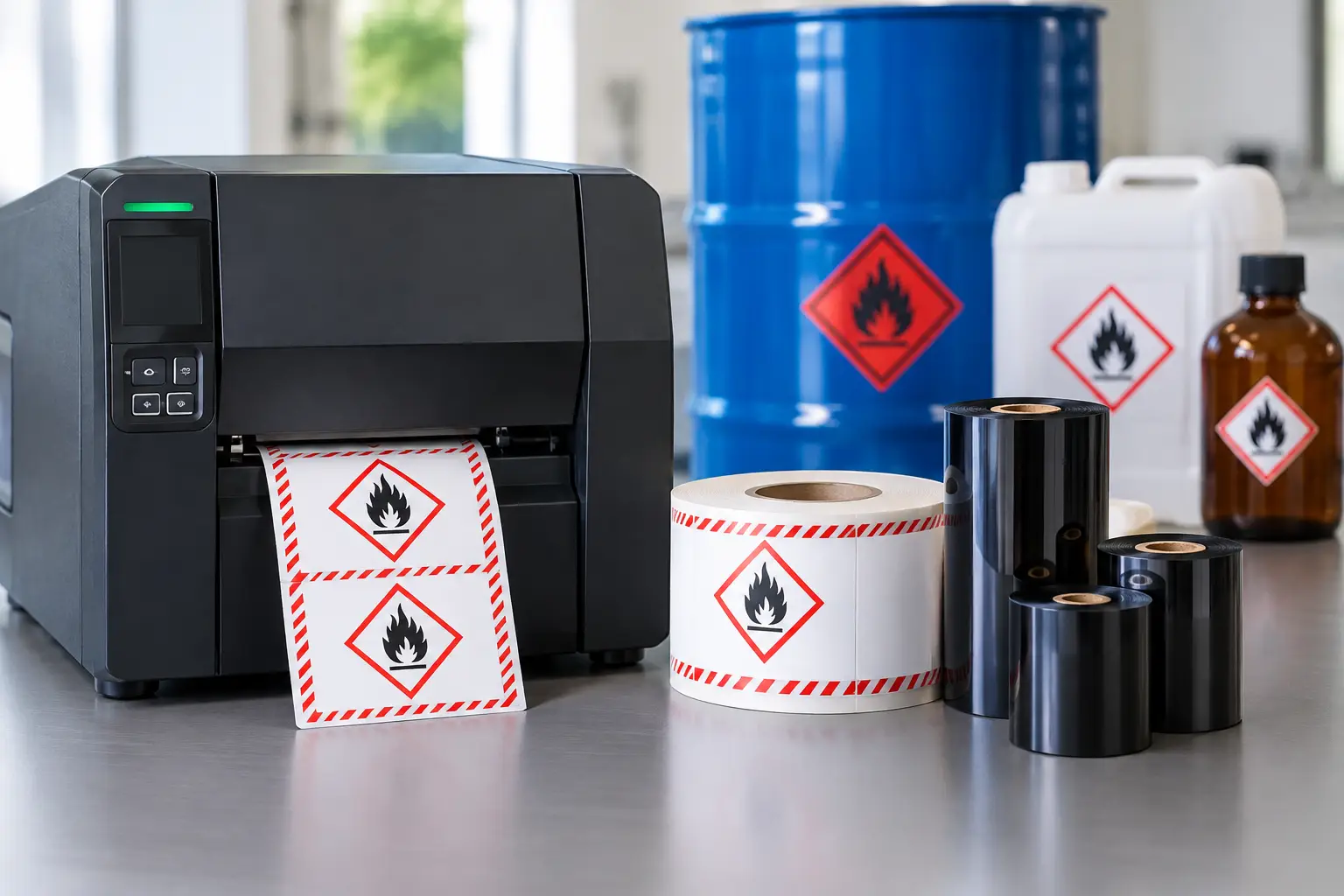
A hazardous waste container can sit safely in the right accumulation area and still create a compliance problem if its label is incomplete, unreadable, or applied too late. This hazardous waste labeling requirements guide explains the operational details that help facilities identify waste correctly from the moment it is generated through pickup, transport, and final disposal.
Waste labeling is not a clerical task. It connects the people generating waste on the floor, the environmental health and safety team managing accumulation areas, and the vendors moving material off site. A label must survive the actual conditions of use while giving employees, emergency responders, inspectors, and waste handlers the information they need.
Hazardous Waste Labeling Requirements Guide: Start With Your Waste Status
Before choosing a label layout, determine whether the material is regulated hazardous waste and which rules apply to the activity. In the United States, federal Resource Conservation and Recovery Act requirements establish the baseline for hazardous waste management, but state, local, and site-specific rules can be more restrictive. Transportation requirements may also apply once waste enters commerce.
Your generator category, the kind of accumulation area involved, the waste stream, and the container type all affect the label content and timing. Satellite accumulation areas, central accumulation areas, universal waste programs, used oil programs, and hazardous materials shipments do not all follow the same labeling rules. Treating every container as if it needs one generic sticker creates confusion and can leave required information off the label.
A practical program separates labels by use case. Employees should have a clear, approved format for containers at the point of generation. Environmental staff should have a distinct format for containers moved into a central accumulation area. Shipping personnel need labels and markings that match the waste profile, manifest, and applicable transportation classification.
What a Hazardous Waste Container Label Should Communicate
For federally regulated hazardous waste containers, the words “Hazardous Waste” are a central requirement in many accumulation scenarios. The container also generally needs enough information to identify the hazards of its contents. The exact method can vary. A facility may use hazard statements, characteristic descriptions, pictograms, Department of Transportation hazard communication, or another recognized hazardous-materials communication system, depending on the regulatory context.
At a minimum, an effective operational label commonly provides the waste description, relevant hazards, and the date required for the accumulation status. It should also support the facility’s internal identification process, such as a waste-stream name, material code, department, or barcode. Internal data does not replace regulated information, but it makes inspections, inventory control, and vendor coordination much easier.
A clear label answers several questions without requiring anyone to open the container: What is in it? What hazards does it present? When did accumulation begin? Where did it come from? Who should be contacted if the container is damaged or uncertain?
Avoid vague descriptions such as “solvent waste,” “lab waste,” or “chemicals” when a more specific description is available. A waste profile may identify a mixture as spent acetone and xylene, corrosive wastewater, paint-related waste, or a particular process residue. The label does not need to become a safety data sheet, but it must not obscure the material’s identity or hazards.
Date fields require discipline
The accumulation start date is one of the most frequently scrutinized label elements because it supports the facility’s storage-time controls. The date must be applied when the relevant accumulation period begins, not filled in later from memory. For containers in satellite accumulation areas, the timing and wording requirements can differ from those for containers in a central accumulation area.
Build the date field into the label design, but make the field easy to complete accurately. A large blank area for a handwritten date may be appropriate in a low-volume operation. In a high-volume environment, a printed date generated from the label system can reduce transcription errors, provided the workflow applies it at the correct point.
Hazard communication must match the actual waste
Do not use hazard symbols as decoration. If a container holds ignitable waste, corrosive waste, toxic waste, or waste with multiple hazards, the communication on the label must accurately reflect the documented waste determination. Review labels whenever a process, formulation, waste profile, or disposal vendor instruction changes.
This is also where generic preprinted labels can fall short. A stock “Hazardous Waste” label is useful as a starting point, but it may not provide enough room for the specific hazards, accumulation date, and waste description your operation needs. Custom label formats are often the better choice when the same waste streams are generated repeatedly.
Make Labels Durable Enough for the Job
A compliant label that falls off a drum is not a compliant label in practice. Label stock, adhesive, ribbon, print method, and container surface all affect performance.
For indoor, dry environments, a quality paper label may be sufficient for short-term accumulation. For drums exposed to moisture, chemical splashes, temperature changes, abrasion, or outdoor conditions, synthetic materials and thermal transfer printing are typically the stronger option. Thermal transfer ribbons produce a more durable image than direct thermal printing for many industrial applications, especially where heat, sunlight, friction, or long storage periods can fade or damage a label.
Container surface matters just as much. Curved drums, dusty totes, textured plastic, and cold containers can cause adhesion failures. Test the label and adhesive on representative containers before standardizing the format. A label that performs well on a clean steel drum may fail on a reusable polyethylene tote with residue on its surface.
Use a label size that can be read at a reasonable distance and leaves sufficient space for variable data. Trying to force a full hazard communication block, a long waste description, and a barcode onto a small label often produces tiny text and poor scan performance. A larger label costs more per unit, but the trade-off may be lower inspection risk and less time spent relabeling containers.
Build a Repeatable Labeling Workflow
The best hazardous waste labels are supported by a simple process that employees can follow under normal production pressure. If the procedure requires workers to search for a template, interpret regulations, and manually enter five fields, errors are predictable.
A reliable workflow typically includes these controls:
- Approved label templates for each accumulation and shipping use case.
- Controlled waste-stream descriptions and hazard language tied to current waste determinations.
- A clear trigger for when the accumulation date is applied.
- Routine checks for legibility, adhesion, closed-container status, and label-to-content accuracy.
- Training that shows employees the actual labels and containers used in their work area.
Barcode data can add value when it supports, rather than replaces, human-readable information. A barcode can identify the container, waste stream, department, or inspection record in seconds. It can also help reconcile containers against waste pickup records. However, an inspector or emergency responder should not need a scanner to understand the basic hazards and status of the container.
Use Software and Printing Equipment That Reduce Errors
Manual handwriting is workable for occasional waste generation, but it becomes inconsistent when dozens of containers move through a facility each week. Label design software allows a compliance manager to control the approved layout while allowing users to enter only the variable information. Dropdown fields, database connections, serialized container IDs, and barcode rules can reduce the chance that someone prints the wrong description or omits a required field.
EasyLabel is a practical fit for operations that need controlled industrial labels without adding a recurring software subscription or requiring a support contract to get help. It has been used by companies, large enterprises, and government agencies for decades, and it works with major printer manufacturers. When paired with a Tharo thermal printer, the operation has one USA-based support source for the software and printer rather than being passed between vendors.
Printer selection should reflect expected volume, label width, print resolution, and the conditions where labels are produced. A low-cost desktop unit may be sufficient for a maintenance shop producing a few labels each month. A warehouse, plant, or environmental services team with steady volume may benefit from an industrial thermal transfer printer built for longer runs and durable ribbon printing. Tharo printers can be a cost-effective alternative to flagship models, with replacement printheads that are generally less expensive than many competing options and strong warranty coverage on qualifying models.
The consumables matter as much as the printer. Poor-quality labels can lift, wrinkle, or jam. Incompatible ribbons can produce light print, poor edge definition, or image smearing. Working with a labeling specialist such as The Label Guy helps facilities match label material, adhesive, ribbon, software, and printer to the actual container and environment instead of guessing from a catalog description.
Inspect the Labeling System, Not Just the Labels
Periodic inspections should look beyond whether a label is present. Check whether the description matches the contents, the date is legible and correct, hazard communication is appropriate, and the label remains securely attached. Review a sample of containers across departments, shifts, and accumulation areas. Problems often appear where responsibility changes hands, such as when containers move from production to a central storage location.
When an error is found, correct the container promptly and trace the cause. Was the template outdated? Did a new employee misunderstand when to date the label? Did moisture cause the adhesive to fail? A corrective action that improves the process is more valuable than simply replacing one damaged label.
Regulations and state interpretations can change, so have qualified environmental personnel review your labeling program against the current rules that apply to your facility. Then give the people handling waste a label system that is clear, durable, and easy to use. That is how compliance holds up when the floor is busy, not just when an inspection is scheduled.