
FDA Food Labeling Compliance Guide for Producers
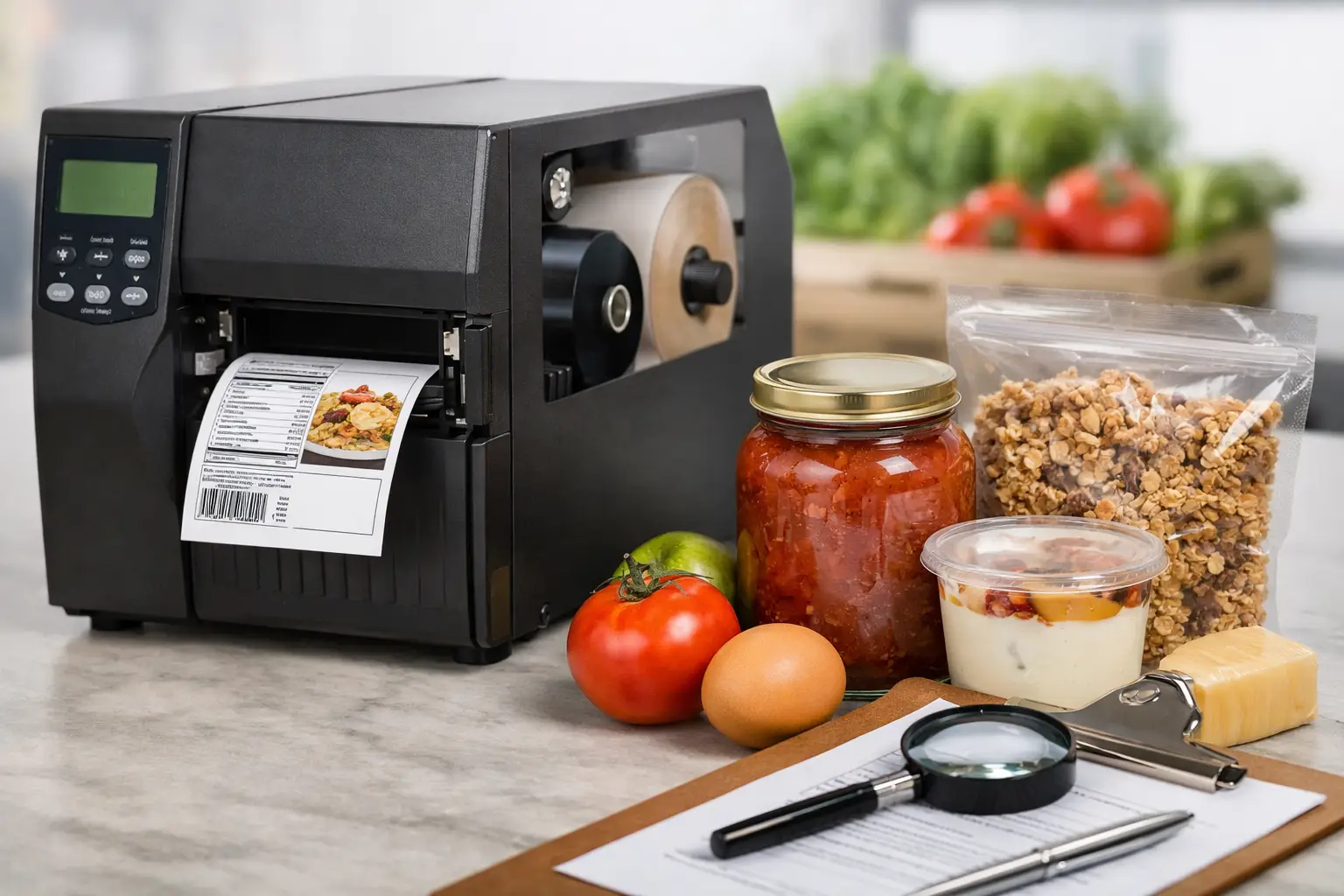
A food label is not finished when the artwork looks right. It is finished when the product identity, ingredient statement, allergen declaration, Nutrition Facts panel, net quantity, and responsible-party information all match the product being packed. This FDA food labeling compliance guide is built for food producers, co-packers, and operations teams that need to turn regulatory requirements into a repeatable labeling process.
The practical challenge is not simply knowing what FDA rules say. It is controlling the version that reaches the production floor, printing it legibly on the right material, and preventing an outdated ingredient or nutrition claim from entering a shipment. Labeling compliance is a document-control and print-control issue as much as it is a regulatory issue.
Start With the Product, Not the Label Template
Every compliant food label starts with a clear product specification. Before a designer creates a layout or an operator loads a printer, document the formula, serving size, package dimensions, intended claims, allergens, and the business responsible for the product. A label template cannot correct missing or inconsistent product data.
For most packaged foods regulated by FDA, the principal display panel must carry the statement of identity and the net quantity of contents. The information panel generally includes the name and place of business of the manufacturer, packer, or distributor, the ingredient list, and required nutrition information. Placement, type size, contrast, and available label space all affect whether the finished package can meet the applicable requirements.
This is where small packaging decisions create large production problems. A narrow jar label may not have room for the same panel arrangement used on a pouch. A promotional package may change the available display area. A new flavor may introduce an allergen absent from the original product line. Treat each stock-keeping unit as its own compliance review, even when products appear similar.
FDA Food Labeling Compliance Guide: Core Label Elements
FDA food labeling requirements depend on the food, package, business, and claims being made. The following elements are the operational starting point for most conventional packaged food labels.
Statement of Identity and Net Quantity
The product name must accurately identify what the food is. A fanciful brand name is not always enough on its own. The statement of identity should appear prominently on the principal display panel and should not mislead the purchaser about the nature of the food.
Net quantity declares how much food is in the package. It is not the package weight or a marketing description. Operations teams should confirm the correct units, placement, and minimum type-size requirements for the package’s principal display panel. If a package size changes, the net quantity statement must be reviewed along with the artwork.
Ingredient List and Major Food Allergens
Ingredients are generally listed by common or usual name in descending order of predominance by weight. That sounds straightforward until a formula contains compound ingredients, processing aids, flavors, colors, or ingredients supplied under trade names. Purchasing, quality, and regulatory teams need current supplier specifications to determine what must appear on the label.
Major food allergens require particular attention. Federal requirements recognize milk, eggs, fish, Crustacean shellfish, tree nuts, peanuts, wheat, soybeans, sesame, and their relevant sources. Allergen information may be declared in the ingredient list when the source is clearly identified or through a compliant Contains statement. The correct approach depends on the ingredient declaration and product facts.
Do not use a precautionary statement such as “may contain” as a substitute for accurate ingredient and allergen labeling. Cross-contact controls, supplier documentation, sanitation practices, and risk assessment belong in the food safety program. The label must accurately declare what the law requires for the product itself.
Nutrition Facts and Nutrient Claims
The Nutrition Facts label is one of the most detail-sensitive parts of a food package. Serving size, servings per container, calories, nutrients, Daily Value percentages, and required formatting need to reflect the current product and applicable FDA rules. Some businesses or products may qualify for exemptions or alternate formats, but an exemption should be confirmed before a panel is removed or simplified.
Claims such as “low sodium,” “good source of,” “gluten-free,” or “no added sugar” deserve a separate review. A claim can affect more than one area of the package. It may require a specific nutrient level, a qualifying disclosure, substantiation, or a different nutrition presentation. Marketing should not add claim language after label approval without regulatory signoff.
Business Name, Address, and Country-of-Origin Considerations
A food label generally identifies the manufacturer, packer, or distributor and its place of business. If the named business did not manufacture the product, qualifying language such as “Manufactured for” or “Distributed by” may be appropriate. Use the legal business information approved for the product, not a shortened variation supplied from memory.
Imported foods and products subject to other agencies may bring additional requirements. USDA-regulated meat, poultry, and certain egg products, for example, follow a different primary regulatory path. Seafood, alcoholic beverages, dietary supplements, and foods sold across international markets can also involve category-specific rules. When jurisdiction or product classification is uncertain, resolve that question before sending labels to print.
Build a Controlled Label Approval Process
The strongest protection against a labeling error is a controlled workflow. Assign ownership for the formula, regulatory review, artwork approval, printer file, and release to production. When responsibility is spread across departments without a final approver, old versions have a way of surviving.
A practical approval record should connect the approved artwork to the product SKU, package size, formula revision, ingredient specification date, and effective production date. Keep retired files clearly marked and inaccessible to routine production users. If a formula changes, trigger a label review automatically rather than relying on someone to remember it later.
Variable data adds another layer of control. Lot codes, best-by dates, UPC barcodes, case labels, and location codes may be printed at the line rather than preprinted. Those fields should be locked to approved formats and verified during startup. A beautifully designed label still fails operationally if the wrong lot date or unreadable barcode is printed on it.
Choose Printing Equipment That Protects Readability
Food labeling often requires more than a desktop office printer can deliver. Cold storage, moisture, handling, oils, abrasion, and long production runs can expose weak materials and poor print quality. The label face stock, adhesive, ribbon, printhead resolution, and printer settings must work together for the package and environment.
Thermal transfer printing is often a practical choice for variable food labels because it can produce durable, high-contrast text and barcodes when matched with the correct ribbon and label material. Direct thermal can work well for short-life applications, but heat, sunlight, and abrasion can limit its suitability. The right answer depends on the label’s required life, storage conditions, package surface, and handling cycle.
Printer reliability matters because a label line does not stop just because a replacement printhead is expensive or software support is difficult to reach. Tharo thermal printers offer a cost-effective alternative to flagship models from larger printer brands, with replacement printheads that are generally less expensive and strong warranty coverage on eligible models. Their 4-inch, 203 and 300 DPI H- and T-Series printers carry a two-year or two-million-printed-inch warranty.
Software should also reduce, not create, version-control risk. EasyLabel has been a leading label design platform since 1982 and does not require a subscription or support contract for help. It works with major printer manufacturers and can help operations teams standardize approved formats for product, barcode, and shipping labels. When EasyLabel and a Tharo printer are purchased together, users have one USA-based support source for the software and printer.
Verify Every New Label Before Full Production
A first-article check should happen at the actual printer, using the actual labels, ribbon, package, and production settings. Review the printed result, not only the screen proof. Confirm that type is readable, variable data is correct, barcodes scan, adhesive performs on the package, and required information has not been clipped by the die cut or wrapped around a container seam.
For a new or changed label, include quality, production, and the person responsible for regulatory approval in the release process. Retain an approved printed sample with the job record. This simple discipline makes later investigations faster and gives the team a dependable reference when shifts, materials, or equipment change.
The Label Guy can supply the printer, EasyLabel software, thermal ribbons, and custom or stock labels from one specialist source, reducing the handoffs that often cause print and compatibility problems. Orders over $100 also receive free ground shipping within the 48 contiguous United States.
A compliant label should be easy to approve, easy to print correctly, and hard to use incorrectly. Build those controls into the process before the next formula change or production rush, and your label system will support compliance instead of becoming the weak point in it.