
Direct Thermal Versus Inkjet Labels Compared
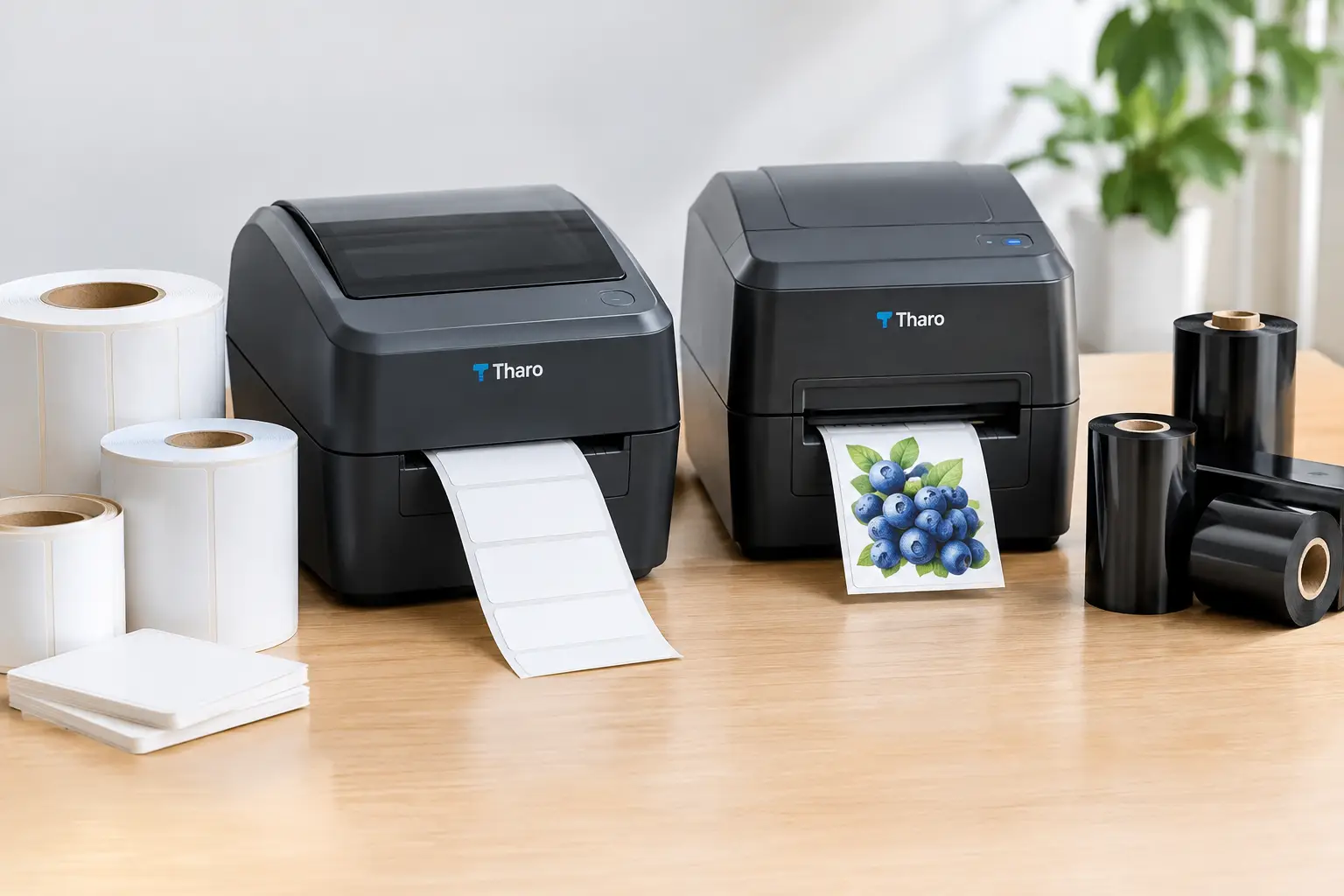
A warehouse label that fades before a pallet reaches its destination creates more than an inconvenience. It can interrupt receiving, delay a shipment, and leave staff manually identifying inventory that should scan on the first pass. That is why the choice between direct thermal versus inkjet labels should start with the job the label must do after it is applied, not simply the price of the printer or the label roll.
For most barcode, shipping, receiving, and short-life identification work, direct thermal is the practical standard. Inkjet labels can be the better fit when presentation, color, and short-run graphics carry more weight. The wrong choice usually shows up later as poor scan performance, smudged print, unexpected supply costs, or labels that do not hold up in their actual environment.
Direct Thermal Versus Inkjet Labels: The Core Difference
Direct thermal labels use a heat-sensitive coated face stock. A thermal printhead applies heat directly to the label, producing text, barcodes, and graphics without ink, toner, or ribbon. The process is fast, clean, and well suited to variable information such as order numbers, serial numbers, shipping addresses, and lot codes.
Inkjet labels are printed by depositing liquid ink onto a compatible label material. They are available in a broader range of colors and can reproduce detailed artwork, photographs, and branded product graphics. However, the label stock, ink set, drying time, and exposure conditions all affect the final result.
Neither technology is automatically better. Direct thermal is designed around efficient operational identification. Inkjet is designed around visual flexibility. A business that ships thousands of cartons per day has different requirements than a producer applying colorful labels to a limited run of retail packages.
Where Direct Thermal Labels Make Sense
Direct thermal is a strong choice when labels are used quickly and do not need to remain readable for years. It is common in distribution centers, e-commerce fulfillment, manufacturing, healthcare, food service, and transportation because it supports fast, on-demand printing at the point of use.
Shipping labels are the most obvious example. Carrier labels generally have a short working life, but they must be readable immediately by people and automated scanners. Direct thermal printers produce high-contrast black images that barcode scanners read reliably when the printer is properly maintained and the label material is matched to the application.
The same advantage applies to pick labels, carton labels, work-in-process tickets, visitor badges, receipt labels, and short-term inventory identification. There is no ribbon to load, no ink cartridge to replace, and no concern about ink smearing during printing. For teams printing hundreds or thousands of variable labels, those details reduce daily friction.
Direct thermal supplies can also simplify purchasing and stocking. Instead of managing printers, ink cartridges, specialty media, and cleaning requirements associated with an inkjet workflow, an operation can standardize around a thermal printer and the right direct thermal label stock. That simplicity matters when multiple shifts need consistent output.
Direct Thermal Limitations to Plan For
Heat-sensitive labels are not intended for every environment. Direct thermal images can darken or fade when exposed to heat, direct sunlight, abrasion, certain chemicals, or extended storage. A label applied to a package moving through a normal shipping cycle may perform very well. A label exposed to outdoor weather, freezer condensation, industrial solvents, or years of handling may not.
The print is generally black only. If a product requires brand colors, visual merchandising, color coding, or photographic imagery, direct thermal will not deliver that presentation. It is also not the right choice for durable asset tags, long-term product identification, or compliance labels expected to remain readable throughout an extended product life.
For those applications, thermal transfer printing is often the better thermal alternative. Thermal transfer uses a ribbon to create a more durable image on paper, synthetic, and specialty materials. It adds a consumable to the process, but it can provide the durability that direct thermal does not.
When Inkjet Labels Are the Better Choice
Inkjet labels are worth considering when the label is part of the product presentation rather than primarily an operational tracking tool. They can produce full-color graphics, gradients, fine images, and polished branding on compatible paper or synthetic materials. This makes them useful for retail products, promotional packaging, specialty foods, cosmetics, craft beverages, and short-run private-label programs.
Inkjet also gives businesses flexibility when each production run has a different design. A company can print a limited batch for a seasonal flavor, regional promotion, or customer-specific package without committing to a large volume of preprinted labels. That can reduce obsolete inventory and speed up product launches.
The trade-off is that inkjet label performance depends on the complete system. A glossy label may require a pigment-ink printer and a compatible coating. A label that will face moisture needs materials and inks rated for that exposure. Print quality can be excellent, but it is not automatic simply because the printer can print in color.
Inkjet Costs Are More Than the Label Price
Inkjet buyers should evaluate total cost per finished label, including ink consumption, print coverage, maintenance, waste, and production speed. A small color logo may be economical. A full-bleed, photo-quality design printed in volume can consume ink quickly and change the economics substantially.
There is also an operational difference between producing graphic labels and producing barcode labels. Inkjet can print barcodes, but barcode quality depends on proper resolution, contrast, ink control, and media selection. For high-volume logistics labels, thermal printers remain the preferred choice because they are purpose-built for consistent variable-data and barcode output.
Inkjet printers can be a good fit for controlled, lower-volume product labeling. They are less likely to be the right primary platform for a busy shipping station that needs immediate labels, high throughput, and minimal operator intervention.
Compare the Label Environment, Not Just the Printer
The best purchasing decision comes from defining the application in practical terms. Consider how long the label must remain readable, what it will contact, how it will be scanned, and whether color is functional or merely decorative.
A direct thermal shipping label can be ideal for a three-day parcel route. That same label may be a poor choice for a warehouse bin exposed to bright light for a year. An inkjet label may look excellent on a retail jar, but it may not be suitable if the jar will be refrigerated, handled with wet hands, or exposed to oils unless the selected material and ink are designed for those conditions.
Adhesive matters as much as print technology. Corrugated cartons, painted metal, plastic containers, freezer packaging, rough surfaces, and curved bottles can require different adhesive systems. The label must stay attached long enough to do its job. A high-quality print on the wrong adhesive is still a failed label.
A Practical Decision Framework
Choose direct thermal when the label is primarily for short-term identification, shipping, routing, receiving, or internal tracking. It is especially effective when black-only printing is acceptable and fast barcode output is the priority.
Choose inkjet when the label needs full-color graphics, product branding, or short-run visual customization. Confirm that the printer, ink, label coating, adhesive, and exposure conditions work together before standardizing on the system.
Consider thermal transfer instead of either option when the label needs durable black print, reliable barcodes, chemical resistance, outdoor performance, or long-term identification. This is often the right path for asset tracking, industrial labeling, laboratory identification, and compliance applications.
For operations that depend on labels every day, buying hardware and supplies from a specialist can prevent expensive mismatches. The Label Guy helps businesses align printers, label materials, ribbons, and label design software with the actual demands of their workflow. A Tharo thermal printer paired with EasyLabel software provides a practical route to on-demand barcode and identification labels, backed by one USA-based support source. EasyLabel has been used worldwide since 1982 and does not require a subscription or support contract for assistance.
Print for the Label’s Real Job
The direct thermal versus inkjet labels decision is ultimately about the conditions after printing. If the label needs to move a package through a fast, barcode-driven operation, direct thermal is hard to beat. If it needs to sell a product from a shelf with color and detail, inkjet may earn its place. Start with the label’s life cycle, then select the printer, material, adhesive, and software that will keep it readable and dependable from application through final use.