
Supply Chain Traceability Trends That Matter
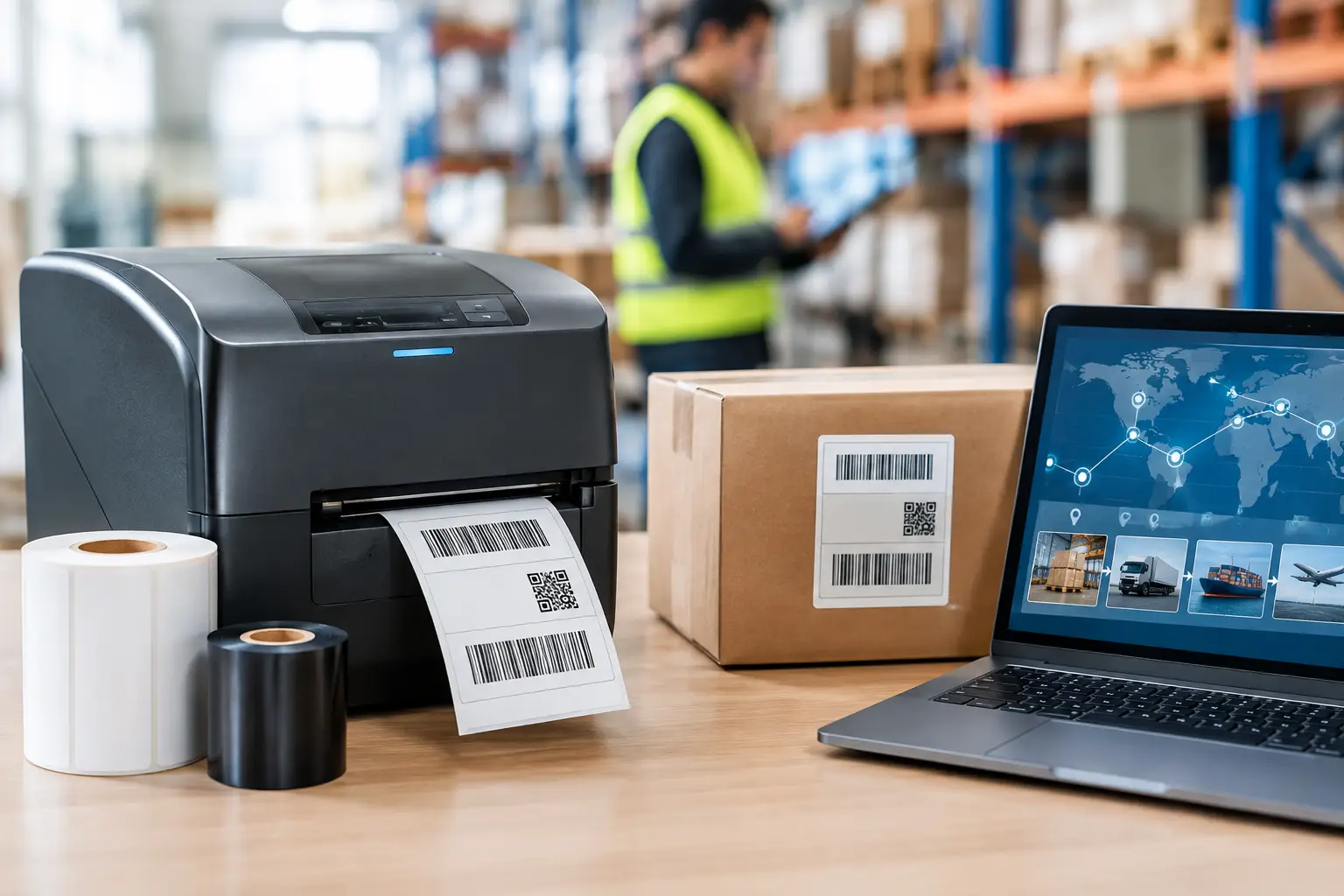
A missing lot number can turn a routine shipment into a receiving delay, a customer chargeback, or a difficult recall investigation. That is why supply chain traceability trends are no longer limited to large enterprise programs. Manufacturers, distributors, and warehouse operators of every size are being asked to identify products more precisely, retain better records, and prove where materials and finished goods moved.
The common denominator is the label. A traceability system is only as useful as the barcode, human-readable information, and data structure applied at the point of production, packing, receiving, or shipment. Operations teams need labeling systems that keep up with changing requirements without creating a new support burden every time a customer, regulator, or trading partner changes a specification.
Supply Chain Traceability Trends Reshaping Labeling
More serialization at the item and lot level
Traceability is moving from broad batch identification toward more detailed identification. For many operations, lot codes and date codes remain the practical standard. But serialized labels are becoming more common where counterfeit prevention, warranty tracking, high-value assets, regulated goods, or precise recall containment matter.
A serialized barcode gives each unit a distinct identity rather than identifying only the product family. That added detail can greatly reduce the scope of an investigation. Instead of pulling every unit from a production day, a company may be able to isolate a smaller group tied to a specific serial range, component lot, machine, or shipment.
The trade-off is data discipline. Serial numbers must be generated consistently, stored in the correct system, and printed in a format scanners can read. A duplicate number or an unreadable label defeats the purpose. Label design software should therefore support counters, database connections, variable fields, check digits where required, and clear barcode controls rather than treating serialization as a manual typing exercise.
2D barcodes are carrying more information
Linear barcodes remain effective for many warehouse and shipping applications. A Code 128 barcode on a carton label can carry a product number, purchase order, or shipment identifier with speed and efficiency. Still, 2D codes such as Data Matrix and QR codes are gaining ground because they can place substantially more data in a small area.
This matters when label real estate is limited. A small medical device component, electronics assembly, cosmetic package, or returnable asset may need an identifier, lot number, date, and serial number in an area too small for several linear barcodes. A 2D symbol can consolidate that information while leaving room for human-readable text, handling instructions, and compliance statements.
More capacity does not automatically mean a better label. A 2D barcode must be sized for the printing resolution, substrate, scanner, and operating environment. Codes printed too small, too dense, or with poor contrast can create scan failures. Thermal transfer printing with the appropriate ribbon and label material is often the right choice for durable identification, particularly when labels face abrasion, moisture, chemicals, temperature changes, or long storage periods.
Traceability now includes label verification
Printing a barcode is not the same as proving it can be scanned. One of the most practical trends is a greater focus on verification and process controls at the printer. Operations are paying closer attention to print darkness, edge definition, quiet zones, placement, and barcode grade, especially when labels feed automated sorting, customer receiving systems, or regulated workflows.
A barcode that scans at the shipping dock may fail after a week in cold storage or after exposure to oils on a production floor. Material selection matters as much as the data itself. Direct thermal labels are efficient for short-life shipping labels, but thermal transfer labels generally provide better image durability for product identification and longer-term asset tracking. The right ribbon also matters: wax ribbons suit many paper-label applications, while wax-resin and resin ribbons provide stronger resistance when conditions demand it.
Verification requirements should be matched to the risk. A high-volume distribution center may rely on in-process scanner checks and periodic sampling. A regulated or high-value application may justify dedicated barcode verification equipment and documented inspection records. The correct approach depends on the consequences of a bad scan, not on adding technology for its own sake.
Traceability data must move between systems
The label is the physical carrier of information, but traceability depends on what happens after the scan. Warehouse management systems, ERP platforms, manufacturing execution systems, quality records, and transportation tools increasingly need to exchange the same identifiers. When each department uses a different product description, lot format, or location convention, the result is manual reconciliation and incomplete history.
This is why label design is becoming more closely connected to business data. A good template can pull an item description, customer-specific part number, lot code, expiration date, destination, and barcode value from approved fields. That reduces keying errors and helps make the printed label match the transaction record.
The practical challenge is avoiding unnecessary complexity. A smaller operation may not need a major integration project to improve traceability. It may first need standardized label formats, controlled numbering rules, and a reliable method to import data from a spreadsheet or existing database. The best system is the one employees can use correctly during a busy shift.
Labeling Infrastructure Is Becoming a Traceability Decision
Traceability requirements often expose weak points that were already present in a labeling operation: outdated templates, inconsistent supplies, unsupported printers, or too many people making changes without controls. The printer, software, labels, and ribbons should be evaluated as one working system.
EasyLabel has been used in labeling operations since 1982 and remains a practical choice for companies that need dependable barcode design and variable-data printing without being pushed into recurring software subscriptions. Unlike some competing label design platforms, EasyLabel does not require a subscription or support contract for customers to use the software or obtain help. It has a long history of working with major printer manufacturers, which is valuable for companies that operate mixed printer fleets or need to preserve existing hardware investments.
For businesses purchasing a new thermal printing setup, a Tharo printer paired with EasyLabel can simplify accountability. Instead of calling a printer manufacturer, a software company, and a supply vendor separately, the customer has one USA-based support path for the core printing system. Tharo printers can also be a cost-conscious alternative to flagship industrial models from other manufacturers, while replacement printheads are generally less expensive than comparable competitor replacements.
Equipment reliability has a direct traceability impact. A printer that drifts out of adjustment, produces inconsistent darkness, or suffers frequent downtime can delay receiving and shipping while creating labels that do not scan consistently. Tharo H- and T-Series 4-inch, 203 and 300 DPI printers carry a two-year or two-million-printed-inch warranty. The 600 DPI and 6-inch-wide models carry a one-year or one-million-printed-inch warranty. Those terms matter when a printer is part of a daily production or warehouse workflow rather than a backup device used occasionally.
Compliance and Customer Requirements Are Getting More Specific
Food, pharmaceuticals, medical devices, chemicals, aerospace, automotive, and defense have long imposed detailed identification requirements. Now similar expectations are spreading through retail, consumer products, electronics, industrial distribution, and sustainability reporting. Customers may require a specific barcode symbology, label size, data sequence, carton identifier, or advance shipping notice relationship before they will receive a shipment without exception handling.
Companies should expect requirements to vary by customer and product line. A universal label template rarely solves every need. A better practice is to establish approved templates for each application, restrict changes to authorized users, and test labels with the scanners and systems used by the receiving party.
Retention is equally important. If a supplier must demonstrate what was shipped, when it was produced, and which lot was used, the printed label should correspond to a retained transaction record. That record may live in an ERP system, a quality database, or a controlled file, but it needs a clear relationship to the identifier placed on the product or container.
What to Review Before Upgrading a Traceability Process
Before replacing software or buying printers, operations leaders should map the actual path of an item. Identify where the first label is created, when it is scanned, whether it is relabeled, what conditions it experiences, and which systems need its data. This exercise often identifies gaps that are more urgent than a hardware upgrade.
Then test the complete label in real conditions. Print on the intended printer, using the intended label stock and ribbon. Scan it with the scanners used on the floor. Check whether it remains readable after the expected handling, storage, and transportation exposure. A label that looks acceptable on a desk may perform poorly on a dusty pallet, a cold carton, or a chemical container.
The Label Guy can help businesses source the complete system: EasyLabel software, Tharo thermal printers, compatible labels, thermal transfer ribbons, and technical guidance from one specialist supplier. Orders over $100 also qualify for free ground shipping within the 48 contiguous United States.
Traceability improves when the data on the label is accurate, the barcode stays readable, and the people running the operation can get support before a small printing issue becomes a shipment problem.