
EazyLabel vs BarTender Software Compared
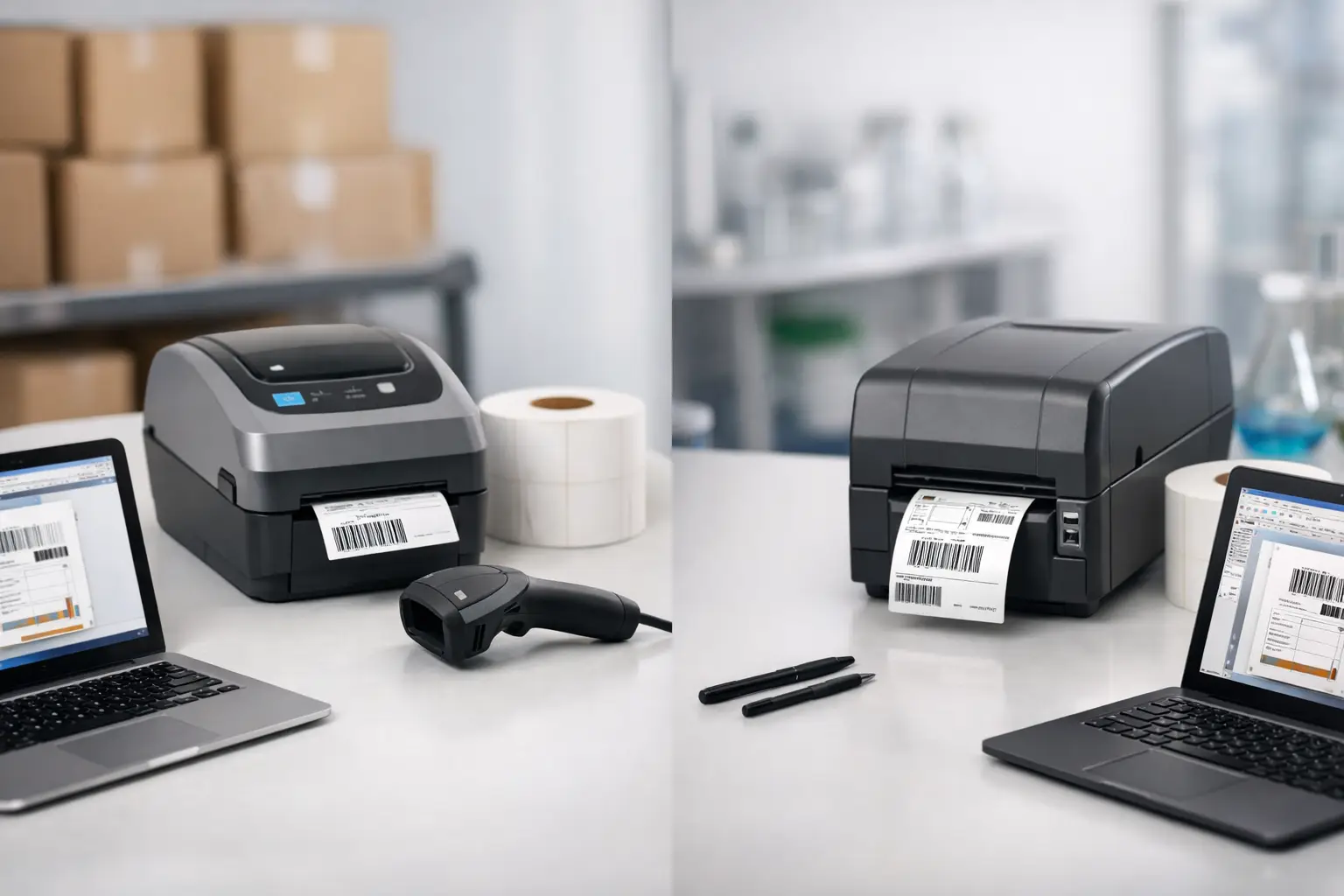
A labeling system is only as useful as it is on the day a receiving clerk needs 600 replacement bin labels before the next truck arrives. That is the practical standard behind an eazylabel vs bartender software comparison. Both platforms are established choices for barcode and industrial label printing, but they approach label design, integration, administration, and support differently.
For manufacturers, warehouses, distributors, and regulated operations, the right choice is not simply the program with the longest feature list. It is the system your team can deploy, operate, maintain, and connect to the printers and label supplies already supporting the operation.
EasyLabel vs BarTender Software: The Core Difference
EasyLabel by Tharo Systems is built around direct, practical label production. It is widely used for barcode labels, product identification, shipping labels, inventory labels, compliance formats, serialized labels, and variable-data printing. Its appeal is straightforward: users can create professional labels without making every routine job a software project.
BarTender is also a capable and well-known labeling platform, particularly in larger environments that require centralized document management, controlled print workflows, database connections, and enterprise-wide administration. It offers a broad range of editions and features designed to scale from desktop label design to managed labeling environments.
The distinction matters because more capability is not automatically more value. A single-site manufacturer printing production and carton labels may benefit more from a direct, efficient EasyLabel workflow than from paying for enterprise controls it will not use. Conversely, a multi-location organization with formal approval processes and tightly managed print access may find BarTender’s higher-level administration attractive.
Label Design and Day-to-Day Usability
Most operations start with a basic requirement: create the right label, pull in the right data, and print it correctly every time. Both EasyLabel and BarTender provide graphical label design tools, barcode generation, text, graphics, counters, serialization, and database-driven variable data.
EasyLabel is especially strong for users who want a focused production tool. The software is designed to make common labeling work approachable for operators, warehouse staff, and production personnel who may not be software specialists. Barcode symbologies, variable fields, database information, and printer controls are available without forcing the user through an unnecessarily complex workflow.
BarTender offers a polished design environment and extensive configuration options. That flexibility can be valuable when a label program must accommodate many user roles, document controls, or complicated rules. It can also mean more planning during implementation. For a business that needs to create and revise labels quickly at the point of use, the extra structure may be more than necessary.
The best test is to look at the labels your team actually prints. If operators regularly create item labels, pallet labels, receiving labels, work-in-process tags, or shipping labels from changing data, evaluate how many steps each package requires to complete those daily tasks accurately.
Database, ERP, and Variable Data Requirements
Variable data is where labeling software earns its keep. Product numbers, lot codes, expiration dates, serial numbers, descriptions, quantities, and customer-specific data should populate reliably from the source your operation trusts.
EasyLabel supports database connectivity and can work with data-driven label formats for common operational applications. For many small and mid-sized businesses, that is the right level of integration: connect a data source, map fields to the label, and print controlled output from a repeatable format. EasyLabel can also support more automated workflows when the application requires it.
BarTender is often considered when integration requirements become highly structured or organization-wide. Companies may choose it for centralized labeling, workflow automation, controlled access, integration with business systems, or environments where label documents require formal management. These are legitimate requirements, but they should be defined before selecting software rather than assumed because an organization expects to grow.
Ask a specific question: does the label need data from a spreadsheet or database, or does it need to be triggered automatically by an ERP, WMS, MES, or custom application across multiple facilities? The first need can often be handled efficiently with a direct labeling solution. The second may justify evaluating a more extensive software architecture.
Printer Compatibility and Print Control
Industrial labeling is not just a design exercise. The software must communicate effectively with the thermal printer, handle the label size and sensor settings, support the required barcode quality, and produce consistent output across shifts.
EasyLabel has a long history in thermal transfer and direct thermal label printing environments. It is a natural fit for businesses using industrial barcode printers for product marking, inventory control, logistics, and compliance labeling. Its printer-oriented capabilities help users work with the realities of thermal printing, including print speed, darkness, label dimensions, and printer-resident formats where applicable.
BarTender supports a wide variety of printer environments and is similarly capable for industrial printing. The more relevant consideration is support responsibility. When a label does not print correctly, the cause may be the software, printer driver, printer configuration, ribbon, label material, or the data feeding the format. Buying software, printers, ribbons, and labels from separate sources can turn a simple problem into a chain of support tickets.
A specialist supplier can reduce that friction by helping match the software to the printer and the printed label to the application. This is particularly valuable for labels exposed to abrasion, moisture, chemicals, heat, freezer storage, or outdoor conditions.
Licensing, Cost, and Operational Value
Software price deserves careful attention, but the lowest initial license cost is rarely the full cost of a labeling system. Consider the edition required, annual maintenance or support expectations, implementation time, training, future user needs, and the cost of downtime when labels cannot be produced.
EasyLabel is frequently a strong value for companies that need dependable barcode label design and printing without buying enterprise features by default. Its practical licensing approach and focused workflow can make it a sensible choice for operations that want control over their label printing while keeping administration manageable.
BarTender’s tiered product structure can be beneficial because a company can select features for its current requirements. The trade-off is that advanced integration, automation, and enterprise controls may require higher editions and a more involved deployment. That investment can be justified when those features are actively used and governed.
Do not compare editions by name alone. Build a short requirements list that includes the number of printers, users, sites, label formats, data sources, automated print triggers, security needs, and expected support requirements. Then compare the total solution required to meet those needs.
Support Can Be the Deciding Factor
Label printing failures are operational failures. A missing shipping label can delay an order. An unreadable barcode can disrupt receiving. An incorrect lot or expiration label can create a compliance issue. For that reason, technical support should carry real weight in an EasyLabel versus BarTender decision.
Businesses that have in-house IT and labeling specialists may be comfortable managing software deployment, printer drivers, databases, and troubleshooting internally. Many operations do not have that luxury. They need a knowledgeable person who understands thermal printers, media, ribbons, barcode requirements, and label software as one system.
EasyLabel is particularly compelling when purchased through a specialist that can help configure the complete labeling environment. The Label Guy provides EasyLabel, thermal printers, ribbons, stock and custom labels, and USA-based technical support from a team focused on labeling applications. That continuity can shorten setup time and make troubleshooting more productive when a job is on the line.
Which Software Is the Better Fit?
EasyLabel is often the better fit for manufacturing, warehouse, distribution, and production teams that need reliable barcode labeling, practical database-driven formats, strong thermal printer support, and an interface that staff can learn without extensive technical training. It is well suited to organizations that value a proven industrial labeling platform and responsive specialist guidance.
BarTender may be the better fit when centralized document management, formal workflow controls, enterprise automation, strict user permissions, or complex multi-site governance are central requirements. Those capabilities can be worthwhile, but only when the operation has the processes and resources to use them fully.
Before choosing either platform, print samples of your real labels with your actual data and printer. Test the difficult cases: a serialized product label, a customer-specific carton label, a regulatory format, and a high-volume batch. The right software is the one that lets your team produce accurate labels consistently, without adding unnecessary cost or complexity to a job that already has to be right the first time.