
EasyLabel vs BarTender Software Compared
A label printing problem rarely starts with the label. It starts when a warehouse cannot print a shipping label, a production line needs a compliant product label immediately, or a new printer will not communicate with existing software. The EasyLabel vs BarTender software decision matters because the right platform affects uptime, training time, support access, and the cost of keeping a labeling operation running.
Both products are established label design and barcode printing solutions used in business environments. Either can produce professional barcode labels, shipping labels, inventory labels, product identification labels, and compliance-focused formats. The more useful question is not which program has the longest feature list. It is which software fits your printers, users, workflow, budget, and support expectations.
EasyLabel vs BarTender Software: The Core Difference
EasyLabel has been a leading label design platform since 1982 and is used by thousands of companies worldwide, including large enterprises and government agencies. Its appeal is direct: it provides serious industrial labeling capability without making a subscription or ongoing support contract a requirement for continued ownership and access to help.
BarTender is also widely recognized in the labeling market. It offers a broad range of editions and is often evaluated by organizations with detailed enterprise controls, centralized administration requirements, or established BarTender deployments. Depending on the edition and support arrangement, however, buyers may encounter subscription-based licensing or support terms that add recurring expense and require closer review.
For many operations, the practical distinction comes down to ownership and complexity. EasyLabel is a strong fit for companies that want proven label design software, broad printer compatibility, and accessible US-based support without building recurring software fees into every budget cycle. BarTender can be appropriate when a company specifically needs the capabilities included in a particular edition and accepts its licensing structure.
Label Design and Barcode Printing Capability
A labeling system must do more than create attractive artwork. It needs to consistently generate scannable barcodes, pull the correct data, place variable fields accurately, and print reliably on the labels used in the operation.
EasyLabel is built for industrial label creation. Users can design labels with text, graphics, barcode symbologies, serial numbers, dates, counters, and variable database information. This makes it suitable for common business needs such as inventory identification, receiving labels, work-in-process labels, carton labels, asset tags, laboratory labels, and product packaging.
The software is designed to be approachable for users who are not programmers. That matters when a shipping supervisor, inventory manager, or production employee needs to revise a label quickly without waiting for an IT resource. A familiar label-design interface and practical database connectivity help reduce the friction between a label request and a printed result.
BarTender also offers extensive design capabilities, including barcode generation, variable data, and database-driven printing. It may be especially attractive to organizations already using its templates, integrations, or centralized document-management features. But more capability is not automatically more value. If your operation needs dependable barcode labels rather than an expansive enterprise software environment, a simpler purchase and support path can be the better operating choice.
Printer Compatibility Is a Business Continuity Issue
Printer compatibility deserves more attention than it usually receives during a software comparison. A label template that looks correct on screen is only useful if it prints correctly at the required speed, resolution, and label size.
EasyLabel has a long track record of working with major printer manufacturers. That gives businesses flexibility when they have an existing printer fleet or need to select hardware based on print width, resolution, duty cycle, media type, and budget. It also reduces the risk of choosing software that limits future printer options.
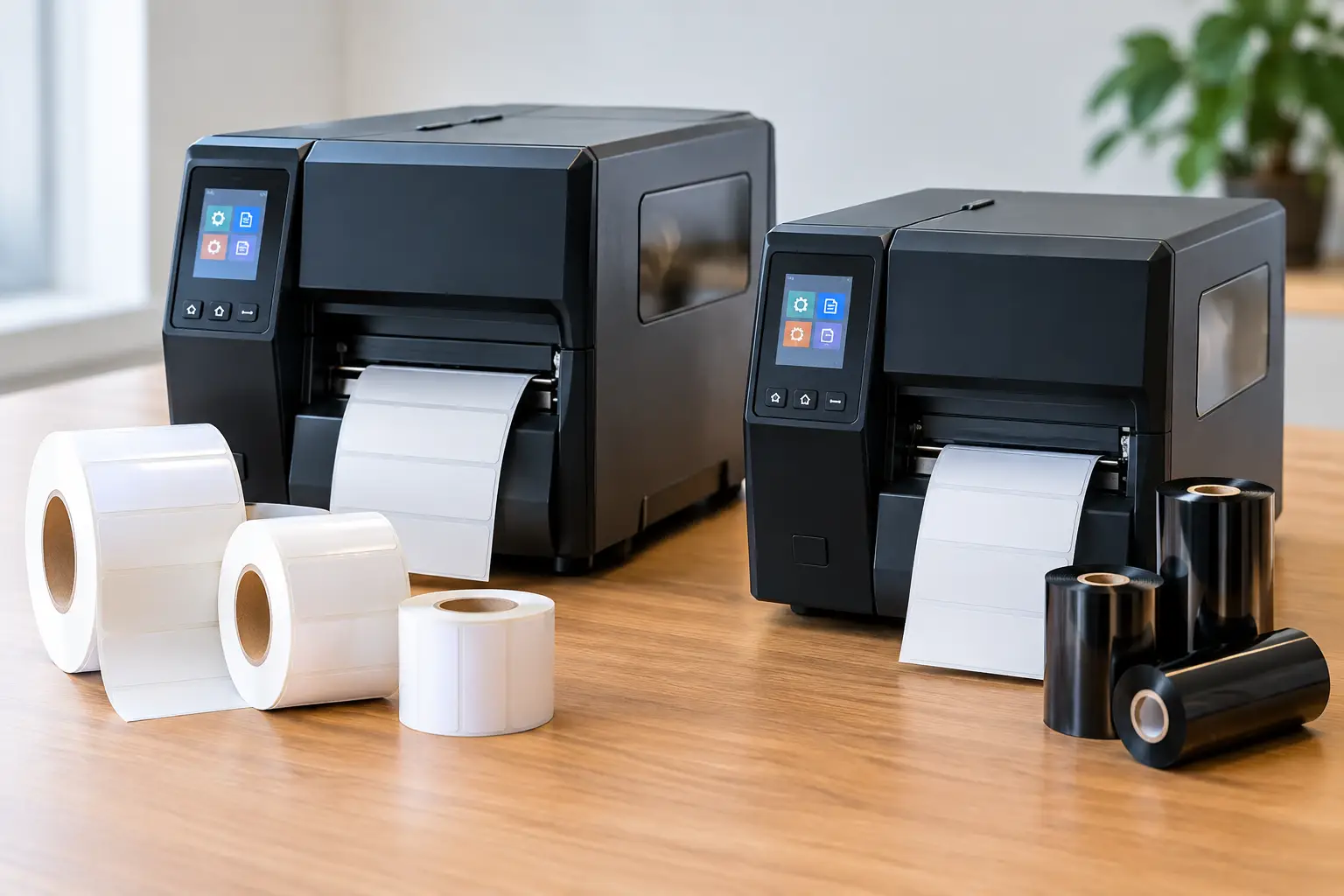
For buyers who want to simplify accountability, pairing EasyLabel with a Tharo thermal printer provides a particularly practical setup. Software and printer questions go to one US-based support source rather than being passed between vendors. That can save valuable time when an operation is trying to get labels moving again.
Licensing and Long-Term Cost
Software cost should be evaluated over the useful life of the labeling system, not just at the initial purchase point. A low entry price can become less attractive if subscriptions, renewals, required support agreements, or edition upgrades become recurring operating costs.
EasyLabel does not require a subscription or support contract. That is a meaningful advantage for companies that prefer a clear software investment and do not want essential assistance tied to an ongoing contract. Businesses can budget more confidently when the software they rely on for daily printing is not subject to a mandatory recurring fee structure.
BarTender licensing can vary by product version, edition, deployment model, and support plan. Buyers should review exactly what is included: printer limits, user or workstation limits, upgrade rights, technical support access, and whether the selected version is subscription-based. This does not make BarTender a poor choice. It means the total cost needs to be calculated carefully, especially for multi-printer environments.
The same discipline applies to hardware. Tharo printers can be more cost-effective than flagship models from other manufacturers, while still providing the performance required for many industrial labeling applications. Replacement printheads are generally less expensive than comparable competitor replacements, an important consideration because printhead replacement is a normal long-term ownership expense.
Tharo also backs many H-Series and T-Series 4-inch, 203 and 300 DPI printers with a two-year or two-million-printed-inch warranty. Six-inch-wide and 600 DPI models carry a one-year or one-million-printed-inch warranty. Those details help buyers evaluate equipment based on operating value, not just purchase price.
Support: Where the Comparison Becomes Real
When labels stop printing, a generic help desk is not enough. The person providing support needs to understand barcode settings, printer drivers, thermal media, ribbon selection, print darkness, sensor calibration, and the requirements of the actual label application.
EasyLabel users benefit from a single USA-based support number. That is especially valuable for organizations using EasyLabel with Tharo hardware because there is one accountable point of contact for the core print system. Instead of debating whether a problem belongs to the software vendor, printer manufacturer, or supply company, users can work with a labeling specialist who understands the full setup.
BarTender support options depend on the purchased product and support arrangement. Larger organizations with internal IT teams and formal software administration may be comfortable managing those channels. Smaller manufacturers, distributors, and warehouse operations often place greater value on being able to call a specialist who can address the practical interaction between software, printer, labels, and ribbon.
Which Software Is Right for Your Operation?
Choose EasyLabel when you want established industrial label design software with no required subscription or support contract, proven compatibility with major printer brands, and a straightforward path to US-based technical help. It is particularly well suited to operations that need dependable barcode printing without unnecessary licensing complexity.
BarTender may be the better fit when your organization has a specific requirement for its edition-based enterprise features, has standardized on its environment, or needs capabilities that are already deeply integrated into existing corporate systems. In that situation, the key is to confirm the licensing, support, and deployment details before committing.
The software decision should also reflect the complete labeling workflow. Labels, ribbons, printer resolution, printhead life, barcode verification expectations, and support responsiveness all influence whether a system performs when the workload is high. Buying these components from separate sources can create gaps in accountability.
A dependable labeling operation starts with software that matches the job, then pairs it with compatible printers and correctly specified supplies. The Label Guy can help businesses build that complete system so the next urgent label request is a routine print job, not a troubleshooting project.