
Custom Label Quality That Holds Up in Use
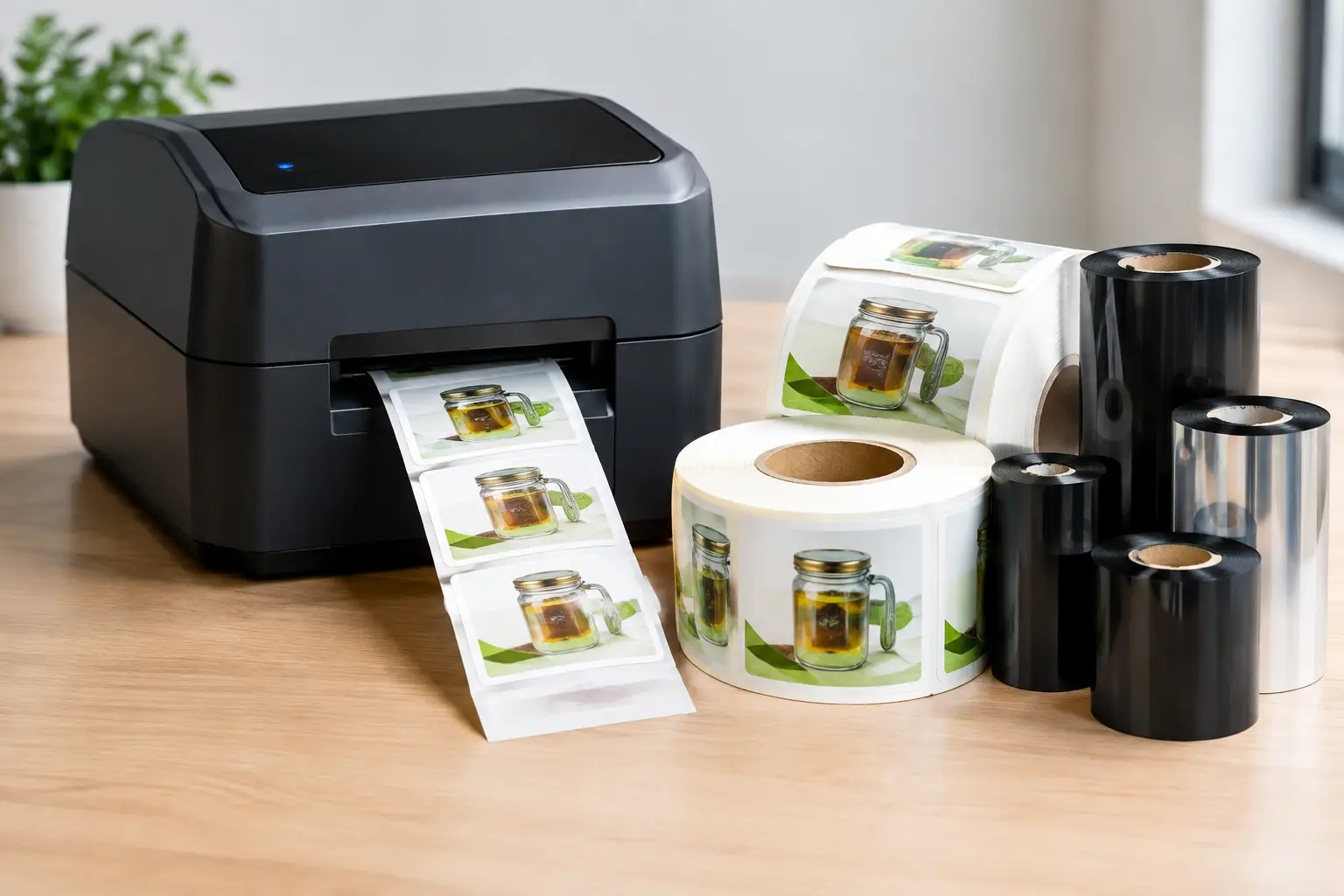
A barcode that scans perfectly at the packing station can become a costly failure once it reaches a cold warehouse, a dusty production floor, or a customer’s receiving dock. That is why custom label quality is not measured by appearance alone. It is measured by whether the label remains attached, readable, and accurate through the conditions your operation actually faces.
For manufacturers, distributors, warehouses, and regulated operations, labels are working components of the process. They direct inventory, identify products, support traceability, and help teams ship the right item to the right place. A lower initial label price means very little if poor material selection creates relabeling, scan failures, shipment delays, or compliance exposure.
What Custom Label Quality Really Means
A quality custom label starts with the correct combination of facestock, adhesive, liner, print method, and artwork. Each element affects performance. A strong adhesive cannot compensate for a facestock that tears under abrasion, and a durable synthetic label will still fail if the adhesive is not suited to the application surface or temperature.
The first question should be practical: What must this label survive? Indoor carton labeling is very different from chemical container identification, freezer storage, outdoor equipment tracking, or labels applied to curved plastic bottles. Temperature, moisture, sunlight, oils, cleaning agents, handling frequency, and surface texture all change the specification.
Print quality is part of the same equation. Barcodes need clean edges, sufficient contrast, and consistent placement to scan reliably. Small text, variable data, lot codes, and compliance symbols must remain legible at the point of use, not just when the first sample comes off the printer. In a high-volume environment, consistency from roll to roll matters as much as a single attractive label.
Match the Label Material to the Job
Paper labels remain an efficient choice for many dry, short-term applications. They are commonly used for shipping, inventory, work-in-process, and general product identification. The trade-off is durability. Paper can scuff, absorb moisture, and tear when exposed to demanding handling or environmental conditions.
Film materials such as polypropylene, polyester, and vinyl provide greater resistance to moisture, tearing, chemicals, and abrasion. Polyester is often selected where long-term durability and resistance to harsh conditions are required. Polypropylene can be a practical option for many product and container applications, while vinyl may suit flexible surfaces or applications requiring conformability. The right material depends on the environment and required service life, not on choosing the most expensive stock by default.
Surface energy and texture also deserve attention. A label applied to smooth corrugated cardboard behaves differently than one applied to rough plastic, powder-coated metal, recycled packaging, or an oily component. If the substrate varies between suppliers or production runs, adhesive testing should reflect that reality.
Adhesive Choice Is a Performance Decision
Many label problems are adhesive problems. Permanent adhesive is appropriate for labels intended to stay in place for the product’s useful life. Removable adhesive is designed for temporary identification, but it must still release cleanly and retain enough tack during use. Freezer-grade, high-tack, and specialty adhesives serve more demanding conditions.
Application temperature and service temperature are not the same thing. A label may perform well in a freezer after application but fail if it was applied to a cold surface without an adhesive designed to bond at that lower temperature. Likewise, a label placed on a warm product line may need to tolerate heat before it ever reaches storage.
A supplier should ask about the surface, application temperature, operating environment, and removal expectations before recommending construction. If those questions are skipped, the customer is being asked to absorb the risk through trial and error.
Print Method Has a Direct Effect on Label Life
Thermal printing is popular because it provides on-demand variable information without the mess and maintenance of ink-based systems. But direct thermal and thermal transfer printing serve different purposes.
Direct thermal labels darken from heat produced by the printhead. They work well for short-life labels such as shipping labels, receipts, and temporary warehouse identification. Their limitation is exposure. Heat, sunlight, friction, and some chemicals can cause fading or darkening over time. A direct thermal label may be the right operational choice for a one-week shipping cycle and the wrong choice for a two-year asset tracking requirement.
Thermal transfer printing uses a ribbon to transfer an image onto the label. This method gives businesses more material and durability options, especially for product labels, compliance labels, durable barcode identification, and applications exposed to handling. Ribbon selection matters as much as label selection. Wax ribbons are economical for many paper applications, while wax-resin and resin ribbons offer progressively greater resistance to smearing, scratching, moisture, and chemicals.
When labels, ribbons, and printers are selected as separate commodities, compatibility problems are common. A ribbon that seems inexpensive can create poor edge definition, low scratch resistance, or excessive printhead wear when it is not matched to the label stock and print settings.
Why Barcode Readability Cannot Be Assumed
A barcode can look acceptable to the eye and still scan inconsistently. Print darkness, speed, resolution, ribbon type, label surface, bar width, quiet zones, and printhead condition all affect scan performance. For operations that rely on automated scanning, a failed barcode is not a cosmetic defect. It interrupts receiving, picking, shipping, inventory counts, and traceability.
High-quality label design leaves adequate space around the code and avoids placing important barcode data across seams, sharp curves, or areas likely to wrinkle. Choosing the right symbology and X-dimension also matters. A compact label may require a more precise printer and more controlled print settings than a large carton label.
Label software helps protect consistency by using standardized templates, controlled data sources, and repeatable print settings. EasyLabel has been used by thousands of companies worldwide since 1982 because it supports practical label design and printing without forcing users into a software subscription or support contract. For teams running multiple printers, locations, products, or labeling formats, that control can reduce the risk of manual changes that introduce errors.
Custom Label Quality Depends on Process Control
The best material specification can still produce disappointing results if conversion quality is inconsistent. Die-cut accuracy affects label placement and printer registration. Clean cuts and reliable release from the liner affect dispensing. Roll winding, core size, label pitch, outside diameter, and perforation requirements must fit the printer and application process.
This is especially important with automated applicators and high-volume thermal printers. A label that feeds poorly can create downtime, waste, and operator frustration. The cost is not limited to the discarded roll. It includes labor, delayed production, missed shipping cutoffs, and the possibility of mislabeled goods.
Artwork control is another part of quality. Product names, revision levels, warnings, regulatory statements, and variable fields should be reviewed before production. A custom label order is an opportunity to standardize what every operator and location prints, rather than relying on local workarounds.
Evaluate Cost Beyond the Price Per Thousand
Price comparisons often focus on the cost per label, which is understandable but incomplete. A cheaper label that lifts, smears, jams, or scans poorly is not actually cheaper once rework and downtime are included. The same principle applies to printers and printheads. A lower-cost printer may save money at purchase, but consumable availability, replacement part pricing, warranty coverage, and technical support affect its total cost of ownership.
Tharo thermal printers are a practical choice for businesses that need dependable thermal output without automatically paying flagship pricing. Their replacement printheads are generally less expensive than comparable replacements from major competitors. Eligible 4-inch-wide 203 and 300 DPI H-Series and T-Series models include a two-year or two-million-printed-inch warranty, while 600 DPI and 6-inch-wide models carry a one-year or one-million-printed-inch warranty.
Buying from a labeling specialist also reduces the handoffs that slow problem solving. The Label Guy can help businesses align software, printer, ribbon, and label construction rather than leaving the customer to determine which vendor is responsible when a barcode will not scan or a label will not stay in place. Orders over $100 also qualify for free ground shipping within the 48 contiguous United States.
Test Before You Commit to a Large Run
For a new application, samples and controlled testing are worth the effort. Apply labels to actual products or packaging, then expose them to the temperatures, handling, moisture, and cleaning processes they will encounter. Print realistic barcode data at production speed. Test scanning with the equipment used on the floor, not only with a phone camera or office scanner.
Watch for edge lift, adhesive failure, ribbon smearing, barcode degradation, label curl, poor dispensing, and inconsistent registration. If the label will be handled by customers, carriers, or field technicians, include that part of the journey in the test. The goal is not to find a label that survives a desk test. It is to specify one that performs reliably in the operation that pays for it.
Custom labels should make work easier: scan on the first pass, stay attached through the required lifecycle, and present accurate information wherever the product travels. When the material, adhesive, ribbon, printer, and software are selected as one system, label quality becomes a practical source of uptime instead of another variable for the operations team to manage.