
Custom Barcode Labels for Inventory Control
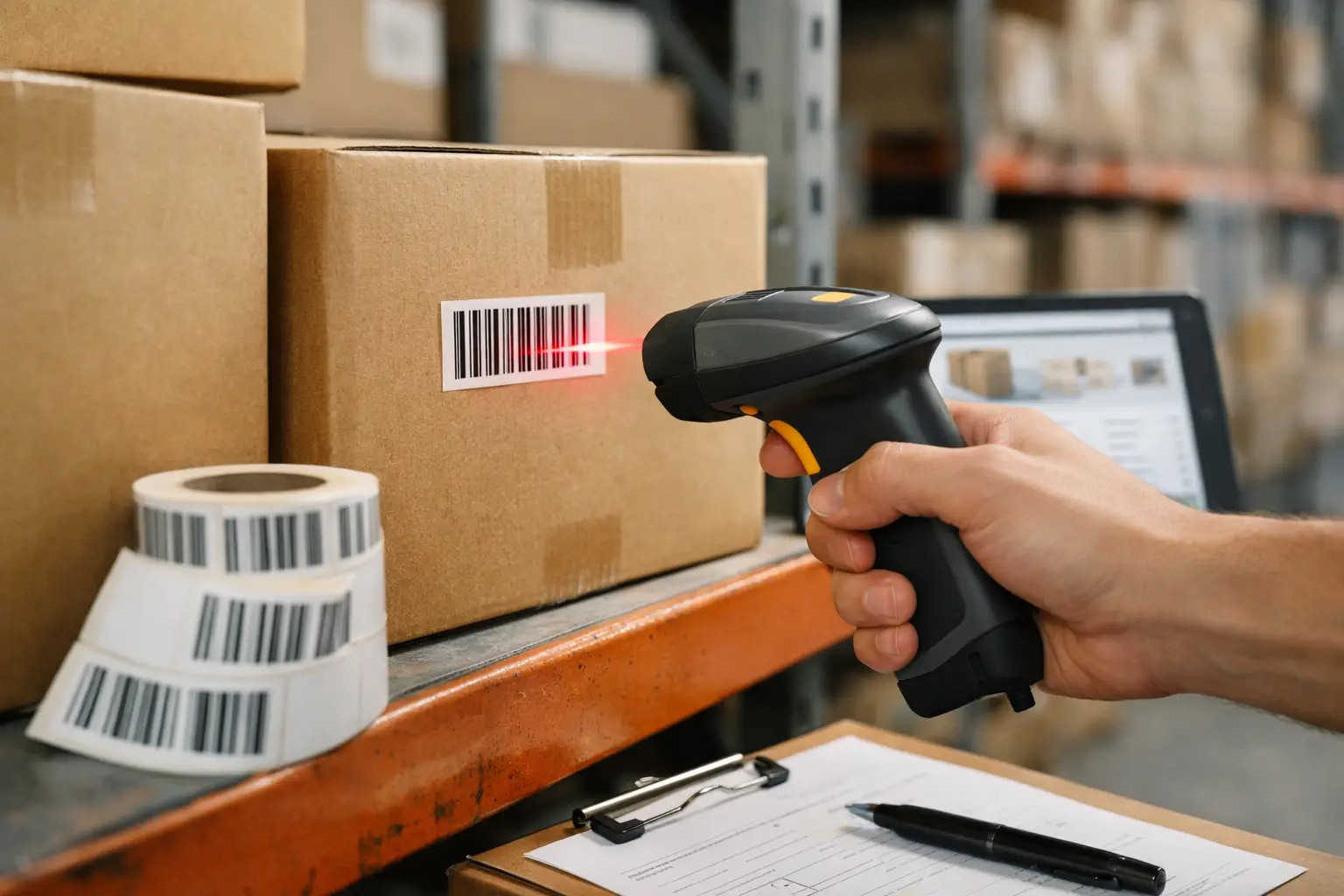
A mislabeled pallet does not stay a small problem for long. It turns into a receiving delay, a picking error, a missed shipment, or a cycle count that no one trusts. That is why custom barcode labels for inventory control matter so much in real operations. When labels are built for your products, storage methods, scan points, and software requirements, inventory moves faster and errors become easier to prevent.
Generic labels can work for basic jobs, but inventory control is rarely basic. Warehouses and production floors deal with different package sizes, harsh environments, long shelf lives, compliance requirements, and multiple barcode standards. A label that scans well on a clean carton in an office setting may fail on shrink wrap, corrugate, cold storage packaging, or chemical containers. The cost of that failure is usually much higher than the cost of getting the label right in the first place.
Why custom barcode labels for inventory control perform better
The main advantage of custom labeling is fit. A custom label is designed around the way your operation actually works, not around a standard stock size that happens to be available. That affects more than appearance. It changes scan reliability, data accuracy, workflow speed, and even how often your team has to stop and reprint labels.
Size is one obvious factor. If a barcode is too small, scanners struggle. If it is too large, it wastes space needed for human-readable text, lot codes, or internal part numbers. The same is true for material and adhesive choice. Paper labels may be fine for short-term indoor inventory, while synthetic materials are often a better fit for moisture, abrasion, chemicals, or temperature swings. The right adhesive depends on whether labels are going on cardboard, plastic totes, metal racks, drums, or returnable containers.
Print technology matters too. Thermal transfer printing is typically the better choice when durability matters, because the printed image resists smearing, heat, and wear better than direct thermal in many applications. But that does not mean every inventory label needs maximum durability. If your label only needs to last through a short storage cycle, a simpler format may be enough. That is where practical guidance from a labeling specialist becomes more valuable than buying labels as a commodity.
What a good inventory barcode label needs to do
A good inventory label has one job: communicate the right data, clearly and consistently, from the first scan to the last. That sounds simple, but several pieces have to line up.
The barcode symbology must match your system requirements. Some operations use Code 128 for internal tracking. Others need UPC, GS1 formats, QR codes, or 2D symbols for higher data density. If your ERP, WMS, or customer compliance standards require a specific format, the label should be designed around that from the start.
The printed data also needs hierarchy. Human-readable text should support the barcode, not compete with it. Item number, description, lot number, location code, and quantity all have value, but not every field deserves the same prominence. Operators should be able to identify what they need at a glance, while scanners read the code quickly from the expected distance and angle.
Durability is another non-negotiable detail. If labels smear in production, peel in refrigerated storage, or fade in transit, your inventory record becomes less reliable with every handoff. A custom label program reduces that risk by matching facestock, adhesive, ribbon, and printer settings to the actual environment.
Where standard labels fall short
Standard labels are attractive because they are easy to source, but ease of purchase is not the same as operational fit. Many inventory problems start with labels that were selected for convenience instead of performance.
One common issue is poor adhesion. Corrugate dust, low-energy plastics, curved containers, and freezer conditions all create problems for generic adhesives. Another issue is inconsistent formatting. If different departments create labels in different software or use different stock sizes, scan performance and data presentation become inconsistent. That leads to workarounds, duplicate labeling, and more training burden for new staff.
There is also the problem of compatibility. Inventory control labels should work with your printers, ribbons, software, and scanners as one system. When businesses source each piece separately, they often end up troubleshooting print quality, calibration, or barcode readability across multiple vendors. That wastes time and usually lands on operations staff who already have enough to manage.
Designing custom barcode labels around your workflow
The best label design process starts with the workflow, not the artwork. You need to know where the label is applied, who scans it, what device they use, how long the label must last, and what system data needs to print in real time.
Receiving labels may need large barcodes for fast inbound scanning and space for supplier or PO data. Location labels often need stronger contrast and larger formats because they are scanned from a distance. Work-in-process labels may need to handle oils, handling, and re-scanning throughout production. Finished goods labels can require customer-specific formats, lot traceability, and shipping data on the same label.
This is where software becomes part of the conversation. Label design software should make it easy to connect variable data fields, control templates, and standardize printing across users and sites. EasyLabel has long been a proven choice in industrial barcode labeling because it supports practical business use, not just design flexibility on paper. For companies that need inventory labels tied to real database fields and repeatable print accuracy, software quality is just as important as label stock.
Custom barcode labels and inventory accuracy
Inventory accuracy is rarely improved by one big fix. It improves when small points of failure are removed. Better labels are one of those fixes because they influence every transaction – receiving, put-away, replenishment, picking, packing, returns, and cycle counting.
When labels scan on the first pass, operators move faster and make fewer manual entries. When data is presented consistently, people are less likely to grab the wrong SKU or enter the wrong lot. When labels stay attached and legible, traceability remains intact longer. Those gains may look incremental, but across thousands of transactions they add up to fewer adjustments, fewer shipping errors, and more confidence in what the system says is on hand.
There is a cost trade-off, of course. A custom label program can cost more upfront than buying an off-the-shelf sheet label or generic roll stock. But if custom labels reduce rescans, rework, spoilage, chargebacks, or downtime, the operational return is often easy to justify. For high-volume operations, even small improvements in scan success rates can produce meaningful labor savings.
Choosing the right supplier for custom barcode labels for inventory control
Not every label vendor is built for operational support. If inventory control matters to your business, you need more than someone who can print labels to a size. You need a supplier that understands barcode standards, printer compatibility, ribbon selection, adhesive performance, software integration, and production lead times.
That matters most when your requirements are not simple. Maybe you need multiple label formats across facilities. Maybe your inventory labels also support compliance or customer-specific shipping requirements. Maybe your team needs help setting up printers, testing barcode readability, or selecting materials that hold up in freezers or on returnable assets. Those are system questions, not just label questions.
A specialist can help you avoid the common disconnect between software, hardware, and consumables. That is one reason many businesses prefer to work with a supplier that can support the full labeling environment instead of only one piece of it. The Label Guy has built that kind of support model around printers, software, ribbons, and custom labels because reliable barcode labeling depends on how the entire system performs together.
When custom labels make the most sense
Custom labels are usually the right move when your operation has repeatable volume, specific scan requirements, environmental challenges, or compliance expectations. They are also worth considering when your current process relies too heavily on manual corrections, handwritten notes, or relabeling.
If your inventory process is very small and low-risk, a stock label may be enough for now. But once errors start affecting order accuracy, labor efficiency, or traceability, label standardization becomes a practical upgrade rather than a nice extra. The goal is not to overengineer the label. The goal is to make sure the label does its job every time it is touched.
Good inventory control depends on consistent execution. Custom barcode labels help create that consistency at the point where physical inventory meets system data, and that is exactly where many avoidable problems begin.