
Best Shipping Labels for Ecommerce Businesses
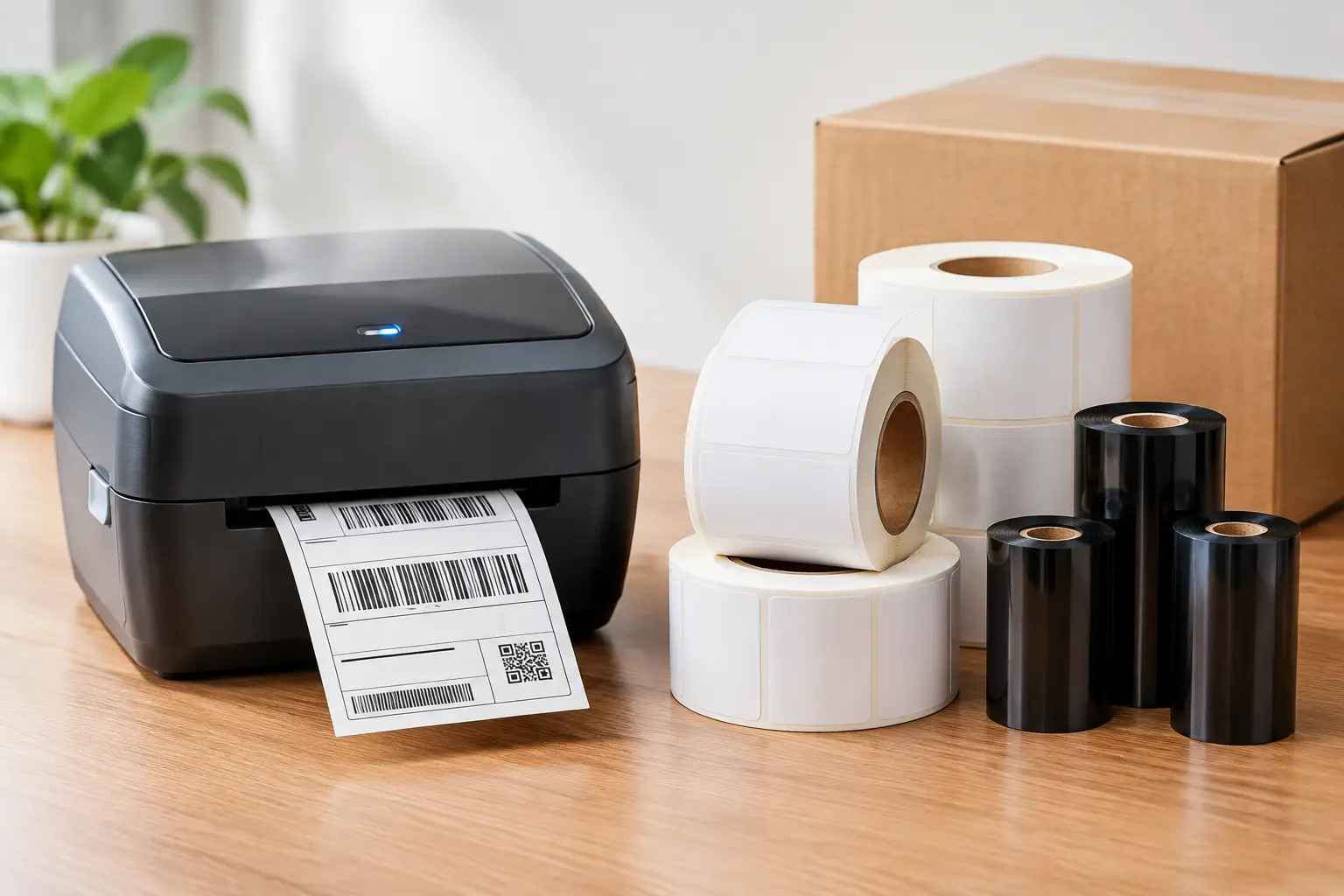
A shipping label that peels off in transit, smears after one pass through a conveyor, or will not scan on delivery can turn a routine order into a customer service problem. The best shipping labels for ecommerce are not simply the least expensive rolls that fit a printer. They are labels matched to the package, shipping environment, printer technology, and volume of your operation.
For a business shipping a few orders a day, a standard direct thermal label may be the practical choice. For a warehouse producing thousands of labels, handling refrigerated products, or printing labels that must remain readable for months, material quality and print method become operational decisions. Choosing correctly reduces reprints, protects barcode readability, and keeps fulfillment moving.
What Makes a Shipping Label Fit for Ecommerce?
An ecommerce shipping label has one primary job: carry accurate shipment data that remains readable from pack station to final delivery. That sounds basic, but labels encounter friction, handling, temperature changes, moisture, dust, and uneven carton surfaces. A label that looks acceptable when it leaves the printer can still fail when conditions change.
Barcode performance is the starting point. Carriers rely on readable barcodes for automated sorting and tracking, so the label face stock must accept a clean, high-contrast image. Poor-quality thermal material can produce faded bars, inconsistent dark areas, or labels that turn gray before the package reaches its destination. A scanner does not care that the order shipped on time if the barcode cannot be read.
Adhesive matters just as much. Corrugated cartons are the most common application, but not all corrugate is alike. Recycled, dusty, textured, cold, or waxy surfaces can challenge a standard permanent adhesive. The label must make solid contact and remain attached through normal carrier handling without lifting at the corners.
Size also affects accuracy. The common 4 inch by 6 inch format works well for most parcel carriers because it provides room for addresses, routing codes, tracking barcodes, service details, and return information. Smaller packages may require a 4 inch by 4 inch or 4 inch by 2 inch format, but only when the carrier template and required information allow it. Do not reduce label size merely to save material if it creates crowded print or scan problems.
Direct Thermal Labels for Fast Parcel Shipping
Direct thermal labels are the default choice for many ecommerce operations. They use heat-sensitive material that creates an image when it passes under a thermal printhead. No ribbon is required, which means fewer supplies to manage, faster media changes, and a straightforward printing process.
For typical parcel labels, direct thermal offers a practical balance of cost and convenience. It is well suited to shipping departments that print labels at the time of packing and expect the package to move through the carrier network within days or weeks. The clean, ribbon-free setup is especially useful at busy workstations where operators need to load media quickly and keep orders moving.
The trade-off is durability. Direct thermal images can fade when exposed to prolonged heat, sunlight, abrasion, plasticizer chemicals, or certain environmental conditions. That may not matter for a standard ground shipment, but it can matter for products stored outdoors, returned long after the original shipment, or routed through demanding warehouse environments.
Direct thermal stock is not all the same. A dependable label uses consistent coating and face material so the printer can produce crisp black images at normal heat settings. Cheaper material often forces users to increase darkness, which can shorten printhead life, create overly thick barcode lines, and still fail to deliver consistent scans.
When Thermal Transfer Is the Better Choice
Thermal transfer printing uses a ribbon between the printhead and label material. The printer transfers ribbon ink onto the label, producing an image with greater resistance to fading and wear. It adds a consumable and requires proper ribbon-to-label matching, but it is the right approach when shipping labels need lasting durability.
Consider thermal transfer labels when shipments include long-term asset tracking, export documentation, warehouse storage, cold-chain handling, chemical exposure, or harsh distribution conditions. It is also a strong choice for businesses that want one printer platform for parcel labels, product labels, inventory labels, compliance labels, and durable identification tags.
Wax ribbons are generally appropriate for paper labels and everyday indoor applications. Wax-resin ribbons improve resistance to smudging and abrasion. Resin ribbons provide the highest durability when paired with compatible synthetic materials, though they cost more and are not necessary for every package. The correct combination depends on the label material and the conditions the label must survive.
The goal is not to specify the most expensive ribbon for every job. It is to avoid using an underperforming combination where failure costs more than the supply savings.
Best Shipping Labels for Ecommerce by Package and Environment
Most ecommerce parcel operations should begin with premium direct thermal paper labels and a permanent adhesive designed for corrugated boxes. This is the workhorse configuration for standard cartons, poly mailers, and routine carrier shipments. It provides clear print, dependable adhesion, and simple operation without ribbons.
Poly mailers require a closer look. Their smooth plastic surface can work well with permanent adhesive, but mailers may flex significantly during transit. A label with poor adhesive can lift at the edges, especially if the surface has dust, moisture, or wrinkles. Apply the label to a flat, clean area and avoid placing it across seams or folds.
Cold storage, freezer shipments, and damp environments require specialty adhesive and material choices. A general-purpose label may adhere well at room temperature but fail when applied to a cold carton or exposed to condensation. Businesses shipping refrigerated goods should test the label on the actual packaging under actual application temperatures before standardizing on a stock item.
For high-abuse shipments, synthetic labels may be worth the added cost. Polypropylene or polyester materials resist moisture and tearing better than paper, particularly when used with an appropriate thermal transfer ribbon. They are not essential for every outbound order, but they can prevent costly identification failures in demanding applications.
Printer Quality Affects Label Quality
A good label cannot compensate for a poorly maintained or unsuitable printer. Printhead condition, print resolution, media sensors, platen rollers, and correct heat settings all affect barcode readability. If labels show light streaks, missing dots, inconsistent darkness, or wandering alignment, investigate the printer before blaming the carrier or the shipping platform.
For most 4 inch by 6 inch shipping labels, 203 DPI is sufficient. It produces readable barcodes and address text at a cost-effective speed. A 300 DPI printer can be valuable when labels include smaller text, dense 2D codes, detailed product data, or compact formats. Higher resolution is useful when the application requires it, not simply because it is available.
Printer ownership costs also deserve attention. An inexpensive printer that requires expensive replacement printheads, difficult support calls, or frequent downtime can cost more over its service life than a dependable industrial unit. Tharo thermal printers offer a cost-effective alternative to flagship models from larger manufacturers, with replacement printheads that are generally less expensive and warranty coverage built for business use. On qualifying 4 inch 203 and 300 DPI H-Series and T-Series models, coverage extends to two years or two million printed inches.
Software Should Keep Shipping Data Under Control
Ecommerce shipping relies on more than a carrier template. Operations often need to combine order data with SKUs, lot numbers, return details, carton information, barcodes, and internal routing instructions. Label design software should make those tasks manageable without forcing every layout change through outside programming support.
EasyLabel has been a leading label design platform since 1982 and is used by thousands of companies worldwide, including large enterprises and government agencies. Unlike software products that require ongoing subscriptions or support contracts for assistance, EasyLabel does not require either. Its long record of compatibility with major printer manufacturers makes it a practical choice for businesses that need a label system capable of growing beyond basic shipping labels.
When EasyLabel and a Tharo printer are purchased together, users have one USA-based support contact for the software and hardware. That matters when a pack station is waiting on labels, not a ticket number.
Buy Labels as Part of a Working System
The lowest per-roll price is rarely the full cost of a shipping label. Reprints, carrier exceptions, damaged printheads, label changes, and production delays all add cost that does not appear on an invoice. A better purchase decision considers material consistency, adhesive suitability, printer compatibility, ribbon quality when applicable, and access to support.
The Label Guy supplies labels, ribbons, printers, and software as a connected labeling system rather than isolated products. That gives businesses a clearer path when a label must work with a specific printer, ribbon, carton surface, or barcode requirement. Orders over $100 also receive free ground shipping within the 48 contiguous United States.
Start with the shipment your label must survive, not the roll price you hope to pay. Test the material on real packages, print a barcode at normal production speed, and inspect it after handling. The right label is the one that stays attached, scans the first time, and lets your team ship the next order without stopping.