
Tharo Printer Reliability for Demanding Operations
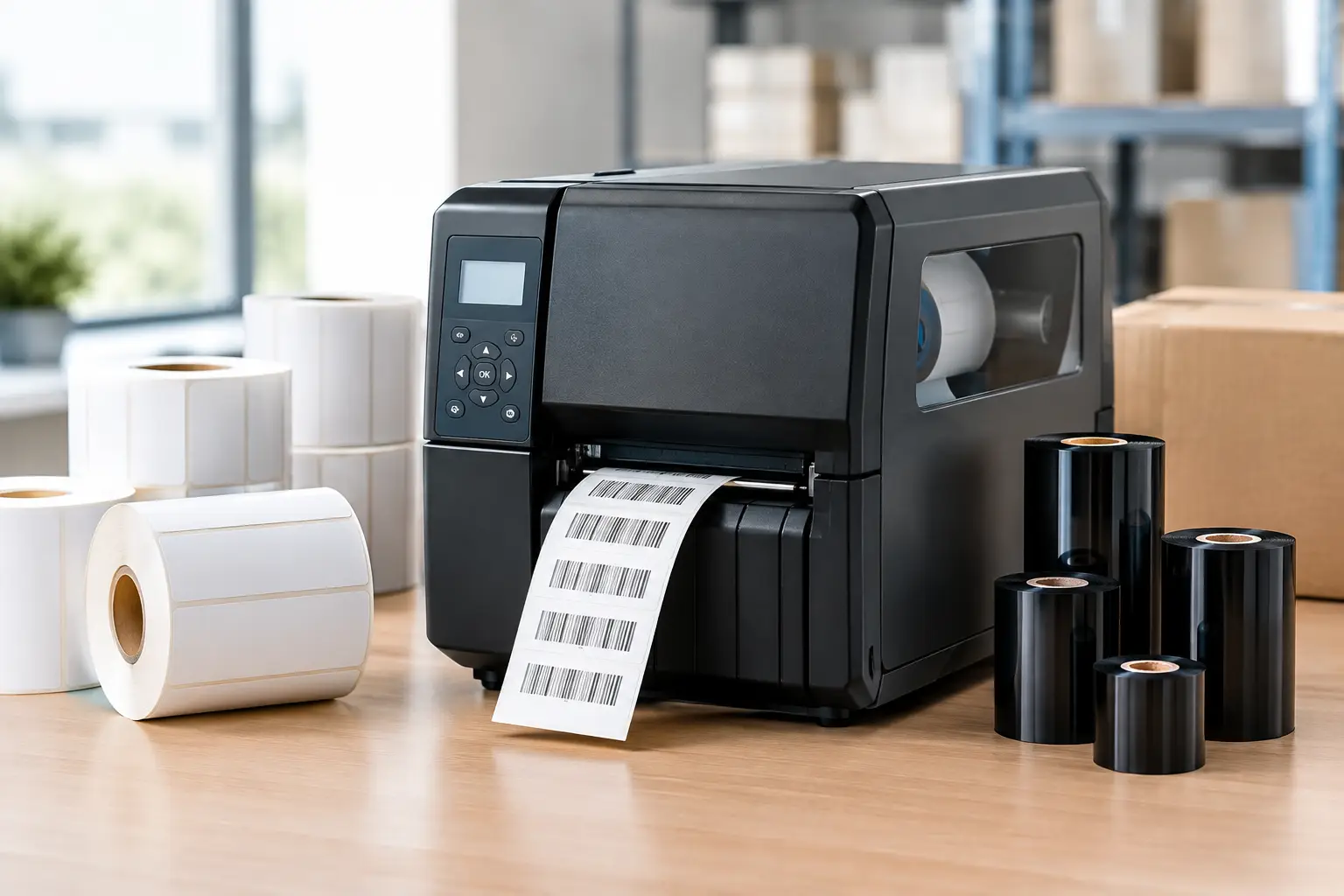
A missed shipping label, an unreadable barcode, or a printer waiting on a costly replacement part can hold up far more than one package. It can slow receiving, inventory transactions, production records, and customer orders. Tharo printer reliability matters because labeling equipment is part of the operating process, not an accessory sitting on a desk.
For businesses evaluating thermal printers, reliability should mean more than whether a unit powers on and prints a test label. The practical question is whether the printer can produce consistent, scannable labels with the right media, integrate with the software your team uses, remain economical to maintain, and come with support when an issue affects production. Tharo thermal printers are built for organizations that need that complete picture.
What Tharo Printer Reliability Means in Practice
A reliable thermal printer produces clear barcodes and text from one shift to the next, handles the intended label stock and ribbon correctly, and does not create unnecessary service costs. That standard applies whether the job is carton labeling in a warehouse, product identification on a manufacturing line, asset tracking, compliance labels, or shipping labels at a distribution station.
Print consistency begins with the correct printer configuration. Resolution, print speed, label width, darkness settings, media sensors, ribbon selection, and label construction all affect output. A 203 DPI printer may be an efficient fit for many standard barcode and shipping applications, while 300 DPI can be a better choice for smaller text, tighter barcode dimensions, or detailed product labels. A 600 DPI configuration serves applications where fine print and graphic detail justify the additional cost.
That distinction is important because no printer is reliable when it is forced into a job outside its intended specification. Selecting a printer for the label size, volume, environment, and required print quality is the first step toward dependable performance. Selecting the right label and ribbon is the next.
Reliability Is a System Issue, Not Just a Printer Issue
Thermal transfer printing relies on the interaction of the printhead, ribbon, label face stock, adhesive, liner, and operating settings. Low-quality or poorly matched supplies can cause weak images, ribbon wrinkling, excessive printhead wear, poor barcode scans, and avoidable downtime. Direct thermal labels have their own trade-offs: they eliminate ribbon costs and simplify operation, but heat, sunlight, abrasion, and long-term exposure can reduce image durability.
For durable labeling, thermal transfer materials are often the better choice. A properly matched wax, wax-resin, or resin ribbon protects print quality and helps labels perform in the conditions they will actually encounter. For example, a warehouse shelf label and a chemical container label should not be treated as the same application simply because both use a barcode.
The advantage of working with a labeling specialist is that the printer, supplies, and application requirements can be considered together. That reduces the common cycle of buying an inexpensive label roll from one source, a ribbon from another, and then troubleshooting poor output at the printer.
Warranty Coverage That Supports Tharo Printer Reliability
Warranty terms are a meaningful part of a printer reliability evaluation. Tharo H-Series and T-Series printers in 4-inch-wide 203 and 300 DPI configurations include a two-year or two-million printed-inch warranty. For 600 DPI or 6-inch-wide printers, coverage is one year or one million printed inches.
Those terms provide a clear measure of manufacturer backing for business-use equipment. The printed-inch component also recognizes that labeling operations place different demands on equipment. A printer producing occasional office labels and a printer running production labels throughout the day should not be assessed by calendar time alone.
Before purchase, operations teams should identify their likely volume and label width, then choose a printer class that fits the workload. Buying more printer capacity than necessary can raise the initial investment without improving results. Buying too little capacity can lead to slower output, greater wear, and an earlier replacement decision. The right fit is usually more valuable than the lowest upfront price.
Lower Printhead Costs Change the Ownership Equation
The printhead is a wear component in every thermal printer. It is exposed to heat, pressure, label materials, ribbon coatings, dust, and normal operating friction. Eventually, it will need replacement. That does not mean the printer has failed. It is part of the expected maintenance cycle.
Tharo replacement printheads are generally less expensive than replacement printheads for competing printer lines. For a business with multiple printers or steady label volume, that difference can matter more than a small gap in initial purchase price. A lower-cost printhead can reduce the financial impact of normal maintenance and make it more practical to keep a proven printer in service.
Printhead life still depends on operating conditions. Rough label surfaces, adhesives that transfer residue, poorly matched ribbons, excessive darkness settings, and inconsistent cleaning can shorten service life. Teams can protect their investment by cleaning the printhead at recommended intervals, using approved supplies, and avoiding the assumption that darker settings always equal better barcode quality. Excessive heat can increase wear without improving scan performance.
Software Compatibility Prevents Avoidable Downtime
Printer hardware is only one side of a labeling workflow. Label design software must communicate correctly with the printer, support the required barcode symbologies, and give users control over variables such as serial numbers, dates, database fields, and print quantities.
EasyLabel has been a leading label design software platform since 1982 and has a long record of working with major printer manufacturers. It is used worldwide by thousands of companies, including large enterprises and government agencies. For operations that need dependable barcode labeling without recurring software fees, EasyLabel does not require a subscription or support contract for help.
That contrasts with label design platforms that rely on subscriptions, tiered support access, or software ecosystems that add ongoing costs as needs grow. The right comparison is not simply feature count. It is whether the software can create the labels your operation needs, remain accessible to the people who print them, and receive knowledgeable support when a database connection, printer setting, or label format needs attention.
When EasyLabel and a Tharo printer are purchased together, the customer has one U.S.-based support path for both the label design software and printer. That is a practical advantage over being passed between a printer manufacturer, a software vendor, and a consumables supplier, each claiming the problem belongs elsewhere.
Where Tharo Printers Fit Against Flagship Alternatives
Flagship thermal printers from larger manufacturers can be appropriate for certain environments, especially where a site already has standardized fleets, specialized management tools, or highly specific enterprise requirements. However, a higher-priced brand is not automatically the more economical or dependable answer for every application.
Tharo printers can offer a more cost-effective option than flagship models from other manufacturers while providing the print quality, configurations, and warranty coverage many business labeling applications require. The lower replacement printhead cost further strengthens the value proposition over the printer’s working life.
The trade-off is that buyers should compare actual requirements rather than purchase based on brand familiarity. Consider label width, daily volume, DPI needs, connectivity, available workspace, media type, and the cost of future service parts. A printer that exceeds the requirement in every category may be unnecessary. A printer that cannot handle the media or workload will create problems regardless of purchase price.
Building a Reliable Labeling Operation
Reliability improves when the purchase decision accounts for the entire workflow. Start with the label’s end use: what it identifies, how long it must remain readable, the surface it will adhere to, and the environmental exposure it must withstand. Then match the printer, resolution, label material, adhesive, and ribbon to that use.
Next, standardize label formats in software and document the settings that produce readable output. This helps maintain consistency when several employees print labels or when a backup printer is needed. Keep commonly used supplies available, particularly for labels that support receiving, shipping, compliance, or production activity where a stockout can stop work.
Finally, use a vendor that can help diagnose the whole system. The Label Guy supplies Tharo printers, EasyLabel software, thermal labels, ribbons, and technical guidance from one source. Orders over $100 also qualify for free ground shipping within the 48 contiguous United States, helping businesses replenish essential labeling supplies without adding unnecessary freight expense.
A dependable printer is not simply the unit with the biggest nameplate or the lowest purchase price. It is the one that fits the application, produces labels that scan when they need to scan, has manageable maintenance costs, and is supported by people who understand the complete labeling process. Build around those requirements, and the printer becomes a dependable part of the operation instead of the next source of downtime.