
How to Match Ribbon to Label Materials Correctly
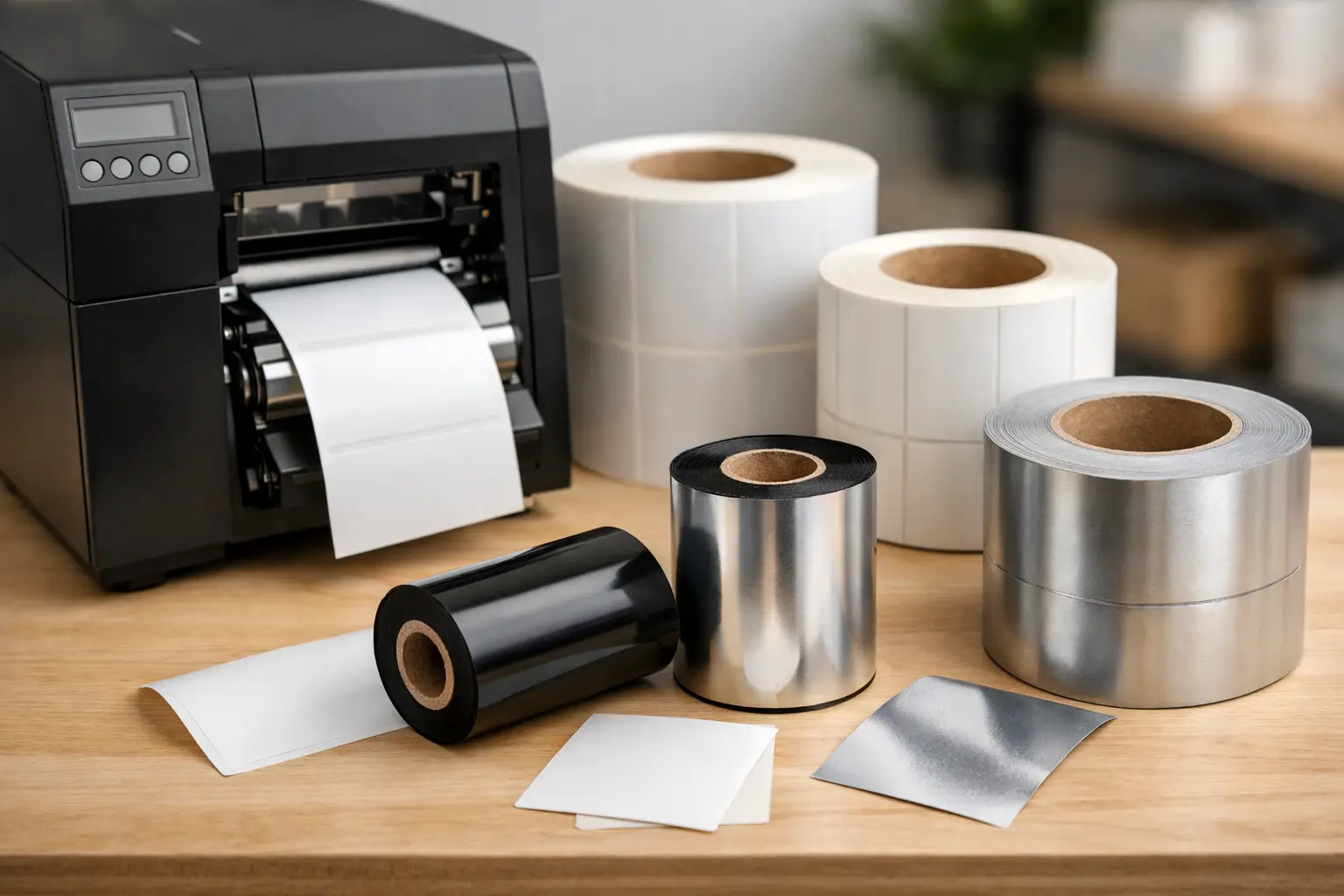
A barcode may look sharp when it leaves the printer and still fail when it reaches the warehouse floor, a cold room, or a customer. Knowing how to match ribbon to label material prevents that expensive gap between initial print quality and real-world performance. The right combination protects barcodes, text, and variable data from smearing, abrasion, moisture, chemicals, and normal handling.
For thermal transfer printing, the ribbon is not an afterthought. It is the ink system that determines whether your label remains readable for its required life. Matching it correctly starts with the label face stock, then considers the environment, print speed, and the information the label must carry.
How to Match Ribbon to Label Material: Start With the Face Stock
The label’s top surface determines how readily ribbon ink transfers and how well it adheres. A ribbon that performs well on a smooth coated paper may print poorly on a rough uncoated tag or a high-performance synthetic film. Before selecting a ribbon, identify whether the label is paper, polypropylene, polyester, vinyl, polyethylene, or another specialty material.
Paper labels are common for shipping, inventory, work-in-process, retail, and short-term identification. They are economical and usually compatible with wax or wax-resin ribbons. Coated paper provides a smoother print surface, which helps produce clean barcode edges and sharp small text. Uncoated paper is more porous and can require more careful adjustment of heat and speed to avoid light print or excessive ribbon use.
Synthetic labels are selected when a paper label will not survive the application. Polypropylene and polyethylene offer moisture resistance and flexibility. Polyester is often specified for asset tracking, electronics, industrial identification, and applications involving heat, chemicals, or abrasion. These materials typically need a resin or higher-performance wax-resin ribbon so the printed image bonds securely to the surface.
Do not choose ribbon based on label color alone. A white paper shipping label and a white polyester asset label may look similar, but their print requirements are entirely different. The face stock, coating, and expected exposure matter far more than the label’s appearance.
Understand the Three Main Ribbon Formulations
Thermal transfer ribbons generally fall into three categories: wax, wax-resin, and resin. Each represents a trade-off between cost, print durability, and compatibility.
Wax ribbons for economical paper labeling
Wax ribbons are the standard choice for many paper-label applications. They provide good print darkness and barcode definition at relatively low energy settings, making them well suited to high-volume shipping labels, carton labels, inventory labels, and general warehouse identification.
Their limitation is durability. A pure wax image can scratch, smear, or rub off more easily than a resin-based image, particularly when labels encounter friction, moisture, oils, or repeated handling. Wax is a practical choice when labels are used indoors, have a short to moderate service life, and do not require chemical resistance.
Wax-resin ribbons for added resistance
Wax-resin ribbons add greater durability while retaining broad compatibility with coated paper and some synthetic materials. They are often the best middle-ground option for operations that need better rub resistance than wax but do not require the maximum chemical and abrasion resistance of full resin.
Use wax-resin when labels travel through distribution channels, receive frequent handling, or need to remain readable beyond a basic shipping cycle. It is commonly a strong fit for product labels, shelf labels, bin labels, and coated-paper applications where a cleaner, more durable image is needed.
Resin ribbons for demanding conditions
Resin ribbons are designed for synthetic labels and high-demand environments. Their printed image is much more resistant to abrasion, solvents, moisture, heat, and harsh handling when matched to the correct label material.
Resin is the typical choice for polyester asset tags, chemical labels, laboratory labels, electronics identification, outdoor equipment labels, and labels exposed to oils or cleaning agents. It costs more than wax, and it may require higher print energy or lower print speeds. That added cost is often justified when a failed label creates a compliance, traceability, or asset-management problem.
Match the Ribbon to the Label’s Actual Environment
A label specification should describe where the label will live, not simply where it will be printed. A warehouse carton label has different requirements than a label applied to a returnable tote, a chemical container, or a piece of industrial equipment.
For dry indoor shipping and receiving, paper labels with wax ribbons are often sufficient. If the carton is handled heavily or stored for an extended period, a wax-resin ribbon may provide a safer margin. For freezer, refrigerated, or humid environments, the label adhesive and face stock are as important as the ribbon. A durable synthetic label and a compatible resin ribbon are commonly the more reliable choice when moisture and condensation are present.
Chemical exposure calls for specific testing. “Chemical resistant” is not a universal claim. Alcohol, oil, cleaners, solvents, acids, and fuels affect printed images differently. A resin ribbon may be necessary, but the correct resin formulation depends on the chemical and the label material. For regulated or high-risk applications, test a printed sample after exposure rather than relying on a general product description.
Abrasion is another frequent source of label failure. Asset tags on tools, containers, racks, and machinery may scrape against surfaces every day. A paper label with wax ribbon can produce a beautiful barcode that becomes unreadable after a few weeks. Polyester with a resin ribbon is usually a better long-term system for this kind of identification.
Consider Printer Settings and Ribbon Compatibility
Even the correct ribbon and label combination can perform poorly with incorrect printer settings. Print darkness, speed, pressure, and printhead condition all affect transfer quality. Increasing darkness is not always the answer. Too much heat can make barcodes bleed, soften fine text, cause ribbon wrinkling, or reduce printhead life.
Begin with the ribbon supplier’s recommended heat range and use the lowest darkness setting that produces a fully readable barcode and solid text. Then test at the speed your operation will actually use. A combination that looks acceptable at a slow test speed may become inconsistent during high-volume production.
Ribbon width also matters. The ribbon should be slightly wider than the label and liner, typically extending beyond the printable area on both sides. A ribbon that is too narrow can leave printhead elements exposed to direct contact with the label surface, increasing wear. An excessively wide ribbon can add unnecessary consumable cost, especially in high-volume operations.
Confirm the ribbon’s coating orientation before loading it. Most thermal transfer printers require a specific ink-side orientation. If the ribbon is loaded incorrectly, it will not transfer ink to the label. A simple tape test can verify which side contains the ink coating when there is any uncertainty.
Run a Practical Validation Test Before Standardizing
The most reliable way to select a ribbon is to test the complete system: printer, label, ribbon, artwork, and application conditions. Print representative barcodes, small text, rotated text, logos, and any dense black areas used in your real label format. Verify scan performance using the scanners in your facility, not just visual inspection.
Then perform handling tests that reflect the application. Rub the print with a dry cloth or gloved finger. Apply the label to the actual product or package. Expose it to cold, heat, moisture, oils, or cleaners as required. For long-life identification, review the printed image after days or weeks of normal use.
Pay particular attention to barcode quiet zones and fine lines. A ribbon that produces dark print but causes edge spreading can reduce barcode quality. The goal is not the darkest possible label. The goal is a clean, durable image that scans consistently throughout the label’s required service life.
Avoid the Most Common Ribbon-Matching Mistakes
The first mistake is using the least expensive wax ribbon for every application. Wax can be an excellent value, but only when the label and environment support it. The second is specifying a premium resin ribbon without confirming that it is compatible with the face stock. Not all resin formulations adhere equally to every synthetic material.
Another mistake is treating adhesive performance and print performance as the same issue. A label can stay firmly attached while its printed barcode rubs away. Conversely, a durable resin image does not help if the label adhesive fails in a freezer or on a textured surface. Evaluate the full construction: face stock, adhesive, ribbon, and application surface.
Finally, avoid changing labels or ribbons without revalidating print settings. A new supplier, coating, or material thickness can change how heat transfers through the label. A short production test is far less costly than discovering scan failures after labels are applied.
For operations that print labels every day, a dependable result comes from treating labels and ribbons as a matched system rather than separate purchases. The Label Guy can help businesses select compatible label materials, thermal transfer ribbons, printers, and software from one specialized source, with USA-based technical support when a printing issue needs a practical answer. Start with the conditions your label must survive, test the full combination under those conditions, and standardize only after the barcode proves it can do its job.