
EasyLabel versus NiceLabel Licensing Compared
A label printer can be down for an hour. A licensing surprise can affect every workstation, every new user, and every budget cycle. That is why EasyLabel versus NiceLabel licensing is more than a software feature comparison. It is a decision about ownership, recurring expense, support access, deployment, and how much administrative overhead your labeling operation can tolerate.
For manufacturers, warehouses, distributors, and compliance teams, the best answer depends on how labels are designed, where they are printed, and who needs access. EasyLabel and NiceLabel are both established names in professional label design and barcode printing. Their licensing approaches, however, can lead to very different long-term operating costs and support experiences.
EasyLabel versus NiceLabel licensing: the core difference
EasyLabel is traditionally sold as a perpetual software license. You purchase the edition and capability level that fits the application, install it on the appropriate system, and continue using that version without a mandatory recurring subscription. EasyLabel does not require a subscription or a support contract simply to keep using the software.
That model is straightforward for organizations that prefer to make a capital purchase, standardize a labeling station, and avoid adding another annual software renewal to the budget. A warehouse with a fixed number of shipping stations, a manufacturer printing product and compliance labels, or a distributor running inventory labels may value knowing that the software remains available after the initial purchase.
NiceLabel offers multiple products and deployment options, including cloud-based and enterprise-oriented systems. Depending on the product selected, licensing may be subscription-based, tied to cloud access, based on users or printers, or structured around a broader managed labeling environment. That can be a practical fit for companies that want centralized cloud access, frequent platform updates, or an enterprise deployment managed across many sites.
The trade-off is that buyers need to examine the commercial terms closely. A low entry cost may be attractive, but recurring fees, renewal requirements, user limits, printer limits, and support arrangements can change the total cost over several years.
Perpetual ownership versus recurring expense
The clearest advantage of EasyLabel licensing is ownership. Once the license is purchased, the business has a working label design and printing platform without being required to maintain an ongoing subscription. Companies can still choose to purchase help, upgrades, or additional licenses when their needs change, but those choices are not the same as a mandatory recurring charge to retain basic use of the software.
This matters when labeling is an operational necessity rather than a constantly changing software project. If a facility has dependable label formats for cartons, pallets, work-in-process items, serialized assets, or shipping labels, it may not need a new cloud release every month. The priority is often stable printing, dependable database connections, and a known process that operators can follow.
NiceLabel’s subscription and cloud-oriented options can make sense when the business wants predictable operating expense, centralized administration, or access from distributed locations. A company opening new sites regularly may prefer a licensing structure designed for centralized management. The right question is not whether subscription licensing is inherently good or bad. The question is whether the ongoing payment delivers a capability the operation will actually use.
Before selecting a NiceLabel plan, ask for a written explanation of what is included at purchase and what depends on renewal. Confirm whether label design, printing, cloud storage, technical support, upgrades, additional users, and additional printers are included or separately billed. Those details determine the real cost.
Support should not be hidden behind a contract
Software support is especially important in labeling because printing problems rarely wait for a convenient time. A label template that shifts, a database field that does not populate, or a printer configuration that changes after a PC replacement can stop shipping, receiving, or production.
EasyLabel’s licensing model does not require a support contract for a customer to own and use the software. That removes a common concern for buyers who do not want support eligibility tied to a subscription decision. EasyLabel has been a leading label design platform since 1982 and is used worldwide by many thousands of companies, including large enterprises and government agencies. Its long operating history matters when a business needs software that is familiar with real industrial labeling requirements rather than a short-lived application built around a trend.
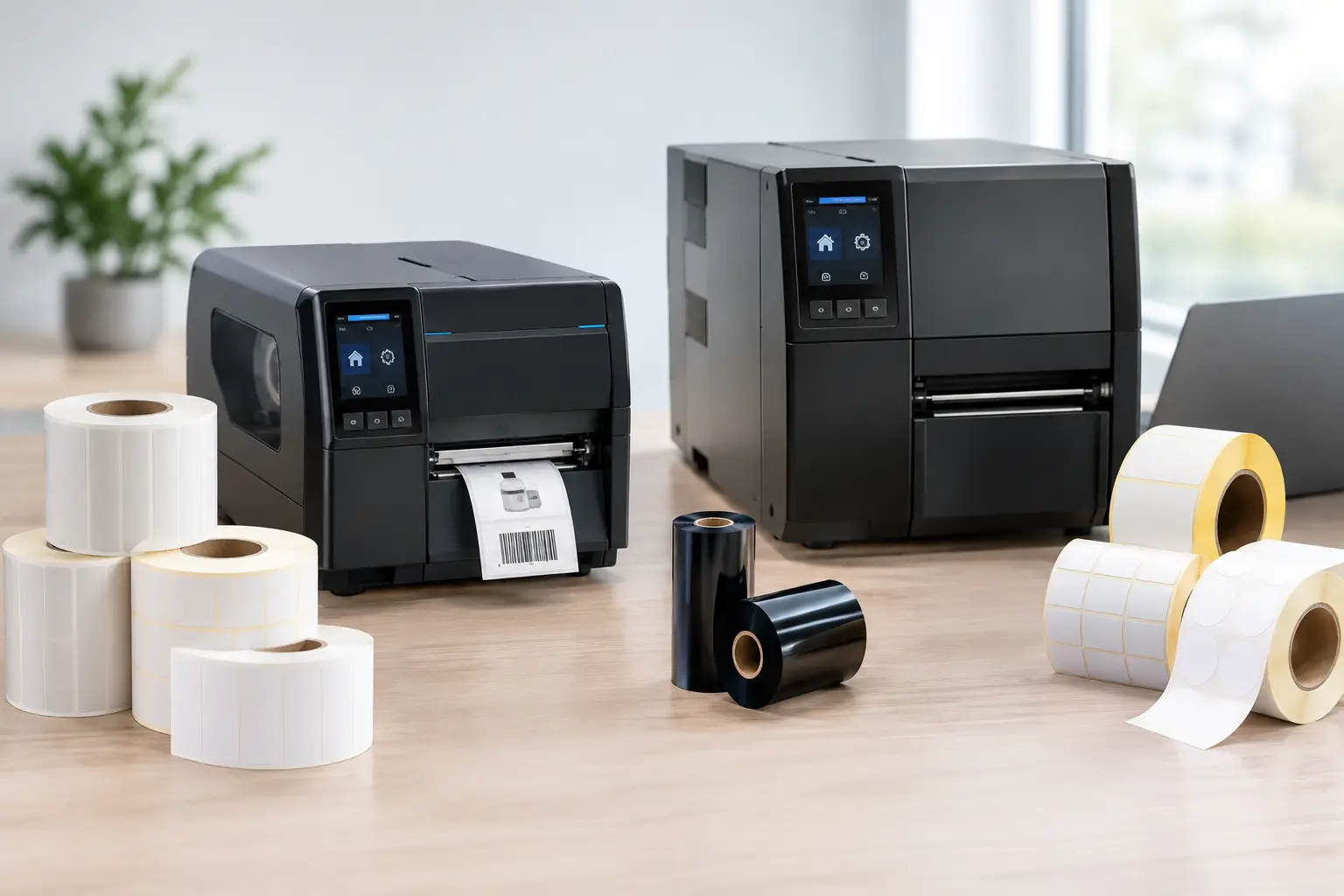
Support is even simpler when EasyLabel is paired with a Tharo thermal printer. Instead of asking whether an issue belongs to the software provider, printer manufacturer, or reseller, customers have one USA-based support number for the system. That is a meaningful operational advantage when staff need an answer quickly.
NiceLabel users should clarify the support path before purchase. In some licensing arrangements, support and software maintenance may be bundled with the subscription or available through a reseller or service agreement. There is nothing wrong with that structure, but it should be understood before a production labeling system is deployed.
Licensing must match the way you print
A single desktop label printer and a multi-site labeling program do not need the same licensing structure. EasyLabel is well suited to businesses that need professional label design, barcode creation, variable data, database integration, and reliable printer output without forcing every use case into a subscription model.
For example, a food producer may use one or several controlled workstations to print lot, date, ingredient, and carton labels. A parts distributor may print bin labels, receiving labels, and shipping labels from a database-driven workflow. In both cases, the value comes from dependable output and repeatable formats. A perpetual EasyLabel license can be a practical, cost-controlled fit.
NiceLabel may be more appealing where cloud collaboration and broad enterprise control are the primary requirements. Organizations with many sites, remote label approval processes, or a formal corporate labeling governance program may place a higher value on centralized web-based administration. Even then, buyers should compare the cost of the preferred deployment model against the number of people and locations that truly need those capabilities.
Do not buy enterprise complexity for a two-printer operation. Conversely, do not limit a rapidly expanding organization to a local setup if centralized control is a genuine requirement. The correct license follows the workflow, not the sales presentation.
Printer compatibility affects the real value of software
Licensing is only one part of the decision. Label software must work reliably with the printer fleet, label materials, ribbon selection, barcode standards, and data sources already used in the operation. EasyLabel has a long track record of working well with major printer manufacturers, which gives buyers flexibility when replacing or expanding equipment.
A complete EasyLabel and Tharo printer system can also provide a cost advantage over some flagship printer options. Tharo printers are designed for industrial label production, and their replacement printheads are generally less expensive than comparable replacement printheads from competing manufacturers. That matters because printhead replacement is a normal long-term cost in thermal printing, particularly in high-volume applications or abrasive label materials.
Warranty coverage adds another practical consideration. Tharo 4-inch-wide 203 and 300 DPI H-Series and T-Series printers include a two-year or two-million-printed-inch warranty. Six-inch-wide and 600 DPI models include a one-year or one-million-printed-inch warranty. For buyers evaluating the full cost of ownership, those specifications belong in the same conversation as software licensing.
Questions to ask before you commit
A useful licensing review should cover more than the initial software quote. Ask whether the license is perpetual or renewable, whether it is assigned by user, PC, printer, or site, and what happens if a computer is replaced. Determine whether future upgrades are optional, included, or dependent on an active agreement.
Also ask who supports the complete workflow. If label data comes from an ERP, WMS, spreadsheet, or database, identify who will help troubleshoot a connection issue. If the printer produces poor barcode quality, determine whether the supplier can evaluate the printer, ribbon, and label material together. A fragmented support model can cost more in downtime than a software license saves.
For businesses that want a durable, professional label design platform without mandatory subscription pressure, EasyLabel provides a direct and proven path. The Label Guy can help match the EasyLabel edition, Tharo printer, labels, ribbons, and support approach to the actual application rather than selling software in isolation.
Choose the license that leaves your operation with fewer surprises when the next label must print – not just the one that produces the lowest number on the first quote.